
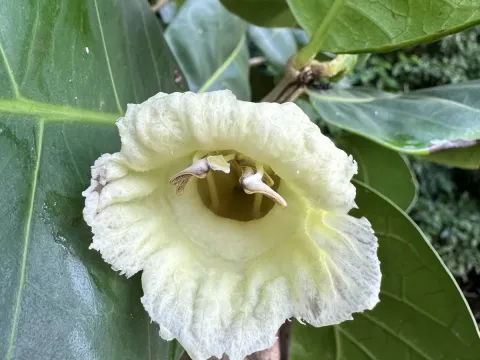
Amphitecna
Amphitecna
Amphitecna is a genus of evergreen trees and shrubs belonging to the Bignoniaceae family. Native to the tropical regions of Central and South America, these plants are well-adapted to high-humidity forest environments.
What the section contains

Amphitecna
The cultivation of Amphitecna requires a warm climate with consistent temperatures throughout the year. The plants are highly sensitive to frost and require sheltered locations to prevent damage from strong winds and rapid temperature fluctuations.
Optimal soil conditions include well-drained, nutrient-rich substrates. The plants thrive in environments where the soil is moist yet aerated, ensuring that the root system has access to oxygen while maintaining sufficient hydration.
Agricultural practices involve regular irrigation, especially during dry spells, and the application of organic amendments. Pruning is recommended to maintain the tree's health and to encourage the growth of sturdy, productive branches.
The economic utility of Amphitecna is diverse. Beyond its ecological role, the fruits are notable for their durable husks, which are utilized by local communities for various practical applications, while the wood is valued for small-scale craftsmanship.
Fungal pathogens represent the primary threat to Amphitecna, particularly in areas with poor air circulation and excessive moisture. Management strategies include canopy thinning to promote airflow and reduce humidity levels around the foliage.
Scale insects and mealybugs are common pests that feed on plant sap, leading to stunted growth. Monitoring for these pests and implementing early intervention is essential to prevent large-scale infestations.
Root rot remains a critical concern caused by improper watering regimes and poor soil drainage. Ensuring that the substrate remains permeable is the most effective preventative measure for these plants.
Leaf-eating insects can significantly impact the plant's photosynthesis rate if left unchecked. Integrated pest management, focusing on biological controls, is preferred to maintain the health of the specimens.
Sanitation practices, such as removing fallen debris and diseased leaves, are necessary to limit the spread of pathogens. Keeping the growing area clean helps in maintaining the overall vigor of the Amphitecna population.