
Skeletonleaf bursage
Ambrosia tomentosa Nutt.
Description
Growing requirements
Skeletonleaf bursage (Ambrosia tomentosa Nutt.) is a perennial herbaceous plant belonging to the Asteraceae family. Known for its persistent nature, this species spreads primarily through a complex system of horizontal rhizomes, making it a challenging weed in various crop production systems.
Originally native to the grasslands and prairies of North America, the species has adapted to arid and semi-arid conditions. It thrives in open, sunny locations where competition from other vegetation is limited, allowing it to colonize disturbed areas, roadsides, and cultivated fields quite efficiently.
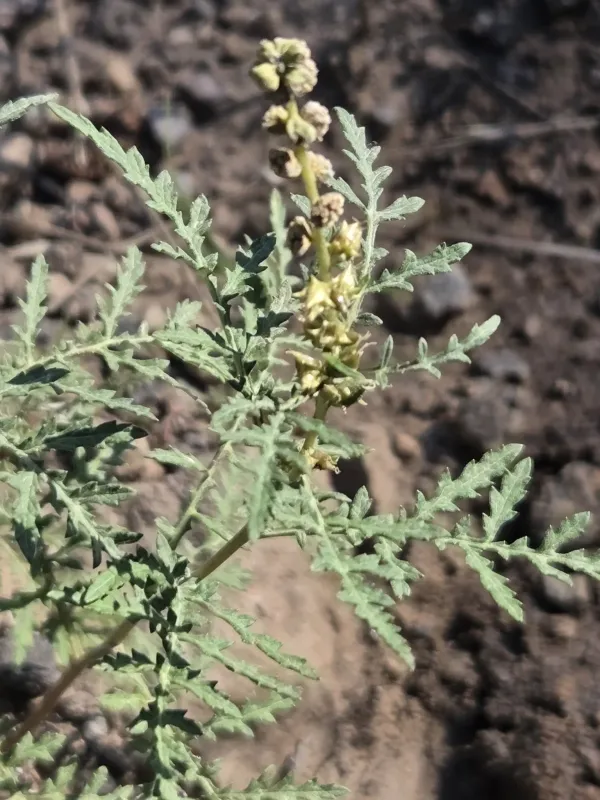
Botanically, the plant is characterized by its distinct silvery-white tomentose (woolly) hairs on the leaves, which provide drought resistance. It typically reaches a height of 20–50 cm, with its root system often extending deep into the soil profile to access water during the dry summer months.
Regarding soil requirements, Skeletonleaf bursage is not overly demanding. It favors well-drained soils and can persist in low-fertility environments where other crops fail to thrive. Its primary agricultural impact is the competition for water and soil nutrients, which can significantly decrease crop yields.
The management of this species involves integrated weed management practices. Due to its vigorous vegetative growth from underground parts, simple tillage is often ineffective and can sometimes facilitate spread. Successful control usually requires a combination of systemic herbicides and a competitive crop rotation program.
Main diseases and pests
The plant is relatively resistant to common pests, as it often produces chemical deterrents that protect it from excessive herbivory. While some insect species might inhabit the plant, they rarely provide sufficient pressure to limit the expansion of this hardy perennial.
Common fungal diseases, such as leaf rusts, may appear on the foliage during wet seasons, but these pathogens rarely affect the rootstock, which remains the primary source of plant vigor and survival throughout the winter and severe drought periods.