
Ambrosia grayi
Ambrosia grayi (A. Nelson) Shinners
Description
Growing requirements
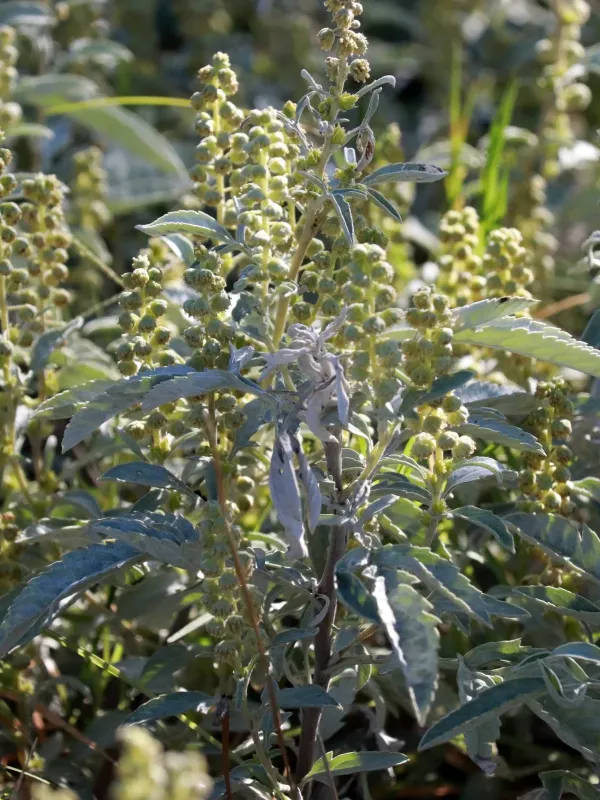
Ambrosia grayi, commonly known as Gray's ragweed, is a perennial herbaceous plant belonging to the Asteraceae family. It is distinct from annual species due to its complex underground rhizome system, which facilitates rapid vegetative propagation in agricultural fields.
Native to North America, specifically the arid and semi-arid regions of the United States, the species is highly adaptable. It thrives in various soil types, displaying a particular tolerance for saline environments where other competitive vegetation often struggles to survive.
The plant requires high levels of solar radiation to reach its full development potential. Its climate requirements are flexible, allowing it to establish deep roots in diverse weather conditions, making it an extremely resilient species in both dryland and irrigated crop systems.
Botanically, it features rigid stems and deep, extensive root networks. These roots allow the plant to store significant reserves of nutrients, enabling it to regrow vigorously even after surface-level mechanical damage or partial herbicide treatment.
Agronomic management is challenging and necessitates a multifaceted strategy. Deep tillage is often employed to sever rhizomes and deplete carbohydrate reserves, though consistent follow-up treatments are required to ensure the long-term suppression of this invasive weed.
Main diseases and pests
Ambrosia grayi poses a severe threat to agricultural productivity by acting as a strong competitor for essential resources. It depletes soil moisture and nutrients rapidly, often resulting in significant yield losses for primary crops such as corn, wheat, and forage grasses.
The weed exhibits allelopathic properties, releasing chemical substances into the soil that inhibit the germination and growth of neighboring plant species. This chemical warfare makes it difficult for desirable crops to establish themselves in heavily infested fields.
While specific insect predators like Zygogramma suturalis can impact populations, their efficacy is often limited in non-native environments. Without natural population regulation, the weed can form dense, mono-dominant colonies that are difficult to eradicate with standard practices.
Pathogenic threats to the plant are relatively low, as it shows strong resistance to most common diseases affecting field crops. Consequently, biological control remains a topic of ongoing research rather than a practical solution for farmers at this stage.
Given its status as a persistent weed, quarantine and sanitation are critical. Preventing the spread of rhizome fragments via tillage equipment and ensuring the purity of harvested seeds are the most effective measures to contain the plant and prevent its spread to new areas.