
Common ragweed
Ambrosia artemisiifolia L.
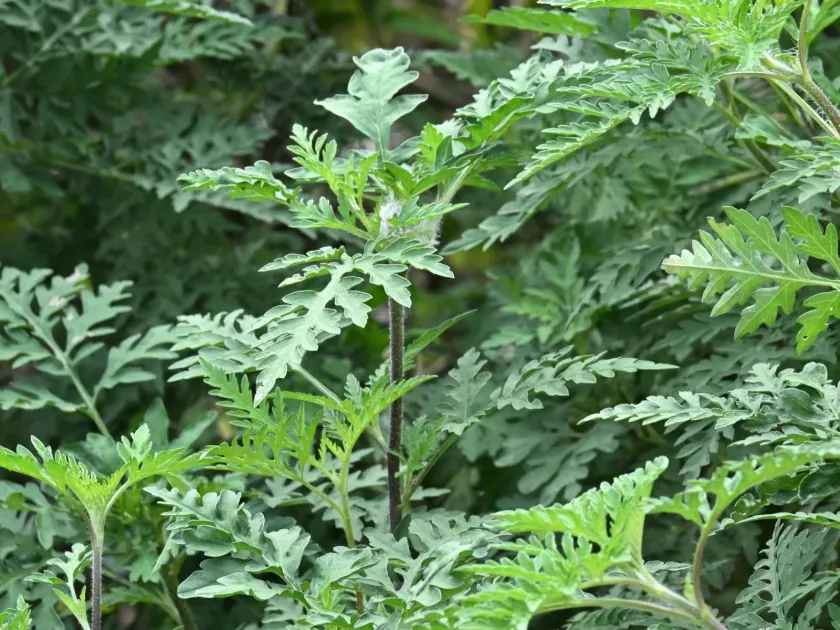
Description
Growing requirements
Common ragweed (Ambrosia artemisiifolia L.) belongs to the Asteraceae family. It is a problematic annual herb that acts as a highly invasive species in agricultural environments globally.
Originally native to North America, this plant has spread across many continents. In an agricultural context, it is considered a major threat due to its rapid growth and competitive nature against standard crops.
Ragweed thrives in diverse soil types, ranging from nutrient-rich loams to degraded soils. It requires plenty of sunlight and does not tolerate shaded areas, making it a persistent weed in open field conditions.
Climate requirements for the plant are moderate, yet it shows extreme adaptability. It typically germinates in late spring and continues its development throughout the summer months, producing millions of seeds per plant.
The plant's impact on agricultural yield is significant because it competes directly with crops for water, light, and nutrients. High infestations can lead to substantial reductions in the economic return of the farm.
Main diseases and pests
Biological control efforts focus on the introduction of specialized insects, such as the ragweed leaf beetle (Zygogramma suturalis). These beetles feed on the leaves and can reduce the overall health of the ragweed population.
Disease pressure on common ragweed is generally low due to its robust immune response. Occasionally, white rust or powdery mildew may be observed, but they rarely provide effective natural control.
Chemical control remains the primary method for large-scale operations. Farmers typically utilize selective herbicides during the early stages of weed growth to ensure minimal impact on the main crop.
Cultural management is vital for sustainable long-term results. Rotating crops and using cover crops can effectively suppress the germination of ragweed seeds by covering the soil surface.
- Mowing before the flowering stage to prevent seed production.
- Strategic use of post-emergence herbicides.
- Maintaining field borders free of uncontrolled vegetation.