
Western ragweed
Ambrosia psilostachya DC.
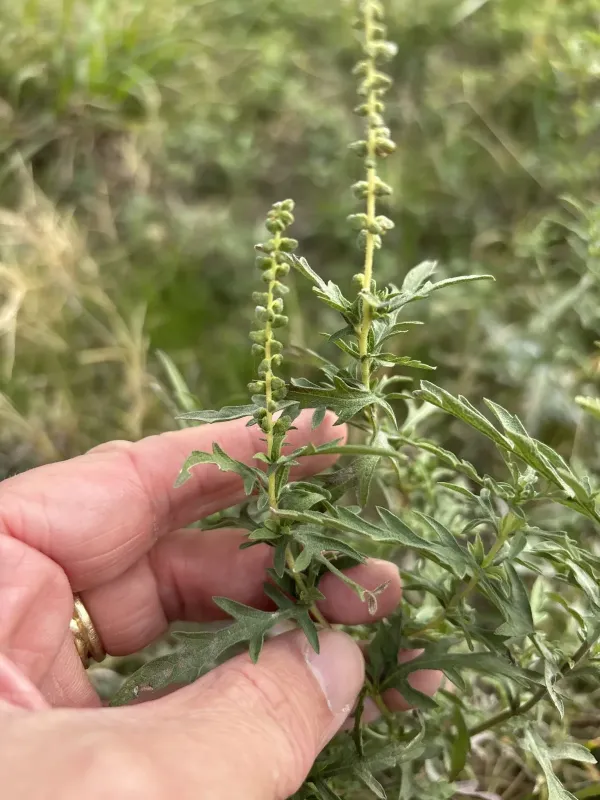
Description
Growing requirements
Western ragweed is a perennial herbaceous plant belonging to the Asteraceae family. Unlike its annual relatives, it propagates efficiently through a creeping rhizomatous root system, making it a persistent and difficult weed to eradicate.
Native to North America, this species has successfully naturalized in many regions across the globe. It is considered an invasive plant that thrives in disturbed soils, pastures, and along roadsides, successfully displacing native vegetation.
The plant demonstrates high adaptability to diverse climatic conditions, including semi-arid environments. It thrives in full sunlight and is known for its ability to dominate open habitats due to its rapid growth rate.
While it prefers sandy or well-drained soils, Western ragweed can tolerate a range of soil types. Its ability to extract water from deep soil layers makes it particularly resilient during periods of severe drought.
Effective management requires consistent and repetitive mechanical disturbance to exhaust the root system's stored reserves. Chemical control is often utilized, although systemic herbicides are necessary to achieve long-term mortality.
Main diseases and pests
The primary concern regarding this plant is its production of highly allergenic pollen. It is a major contributor to seasonal allergies, causing severe reactions in many individuals during the blooming season.
In terms of agricultural impact, Western ragweed acts as a fierce competitor for nutrients and moisture. It significantly reduces crop quality and yield, particularly in pastures and cereal fields where it can form dense colonies.
Western ragweed is notably hardy and exhibits a high degree of resistance to common plant diseases. It rarely suffers from significant pathogen-induced mortality that would limit its expansion in the field.
The plant often serves as an alternative host for various pests and viral pathogens. These can later migrate to nearby economically important crops, complicating integrated pest management strategies.
There are no major natural insect pests that effectively control Western ragweed populations. Consequently, it remains a difficult management challenge for farmers and land managers worldwide.