
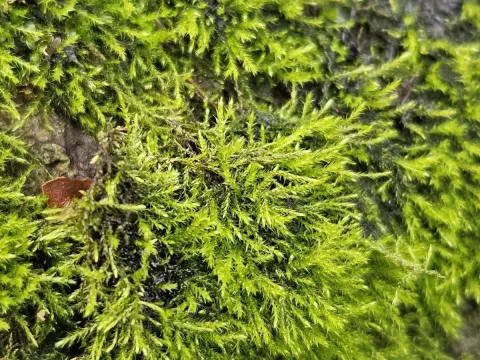
Amblystegium
Amblystegium
Amblystegium is a genus of mosses within the Amblystegiaceae family, known for its preference for wetland habitats. These bryophytes are essential components of riparian ecosystems, contributing to moisture retention and soil stability.
What the section contains

Amblystegium
These plants are naturally distributed across temperate and subtropical regions of the Northern Hemisphere. They typically colonize moist soils, decaying wood, and rocky surfaces located in shaded, humid areas such as stream banks and marshes.
The botanical structure of Amblystegium is adapted to high-moisture environments. It features delicate, creeping stems with leaves that exhibit high physiological activity in terms of water absorption, which is vital for survival in its niche.
Regarding climatic requirements, the plant thrives in conditions with high atmospheric humidity and moderate temperatures. It lacks a complex root system and relies on moisture and nutrients absorbed directly from the surrounding water and substrate.
Agricultural or laboratory cultivation requires precise control over water quality and light levels. Direct sunlight should be avoided to prevent desiccation, while the substrate must remain consistently moist to ensure the plant's healthy development.
The primary threat to Amblystegium populations is the alteration of hydrological regimes. Large-scale drainage projects for agricultural or infrastructure development significantly reduce the suitable area for moss colonization.
Water pollution, particularly the accumulation of heavy metals and excessive chemical fertilizers, poses a severe risk. As bryophytes lack a cuticle, they are highly susceptible to contaminants present in the surrounding water.
Invasive species and rapid eutrophication of water bodies create excessive competition for space and nutrients. When faster-growing aquatic plants cover the surface, Amblystegium loses the necessary light for photosynthesis.
Climate change, manifesting as prolonged drought periods, leads to the rapid drying of moss patches. Unlike vascular plants, Amblystegium has limited mechanisms to survive extended periods of water deficit in the environment.
Pathogenic fungi and bacteria rarely pose a large-scale threat in natural environments, but in enclosed or poorly managed spaces, the accumulation of decaying matter can encourage rot, which affects the moss colony structure.