
Ammannia rotundifolia
Ammannia rotundifolia
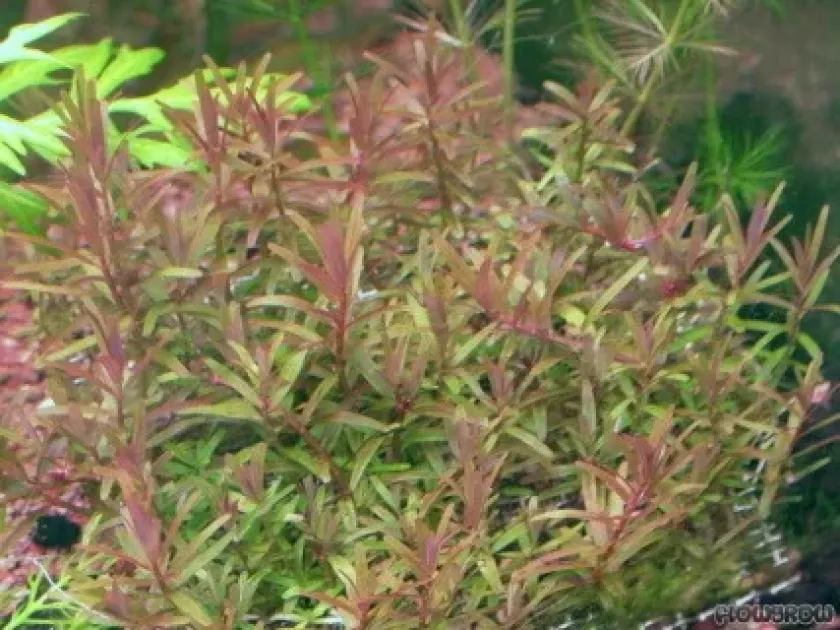
Description
Growing requirements
Ammannia rotundifolia is an aquatic plant species belonging to the Lythraceae family. It is a perennial plant primarily cultivated for its aesthetic and biological properties in aquatic environments and greenhouse ponds.
The species originates from Southeast Asia, where it is found in marshy areas and near rice paddies. Due to its adaptation to wetland conditions, it thrives in warm climates and nutrient-rich environments with high water availability.
Botanically, this plant is recognized by its decussate, round-to-elliptic leaves. Its growth habit is typically erect, but it can trail under certain environmental pressures. The plant is renowned for its ability to change color based on light intensity.
The core requirement for successful cultivation is high-intensity lighting. Without adequate photons, the plant will shed its lower leaves and lose its characteristic vibrant pink or reddish hues, reverting to a dull green shade.
Regarding soil and water quality, it requires a nutrient-dense substrate and soft to moderately hard water. The regular addition of carbon dioxide and micronutrients, specifically iron, is essential for healthy biomass production.
Main diseases and pests
Major threats to Ammannia rotundifolia include drastic fluctuations in water chemistry. Significant changes in carbonate hardness or alkalinity often result in sudden plant stress and the inhibition of vegetative development.
Algal blooms represent a significant environmental hazard. Epiphytic algae covering the leaf surfaces prevent photosynthesis, leading to localized tissue necrosis and potential death of the entire plant structure.
Nutrient deficiency, particularly nitrogen and iron, triggers chlorosis. If the plant fails to produce chlorophyll due to chemical imbalances, it becomes highly susceptible to opportunistic bacterial rot.
Improper substrate aeration can lead to root decay. Since the plant relies on a healthy rhizosphere for nutrient uptake, anaerobic conditions in the soil medium can destroy the root system rapidly.
To maintain plant health, it is necessary to implement a consistent maintenance schedule, including water changes and nutrient testing to ensure that toxic waste products do not reach levels that compromise the plant's immunity.