
Amblystegium serpens
Amblystegium serpens
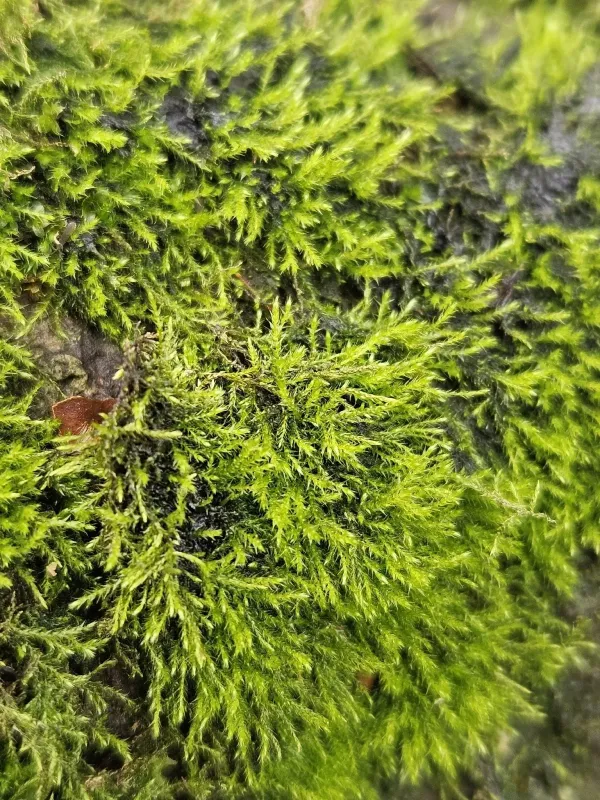
Description
Growing requirements
Amblystegium serpens, commonly known as creeping feather-moss, belongs to the Amblystegiaceae family. It is a cosmopolitan bryophyte widely distributed across the temperate regions of the Northern Hemisphere, thriving in diverse moist environments.
Botanically, this species is characterized by its prostrate, irregularly branched stems and lanceolate, acuminate leaves. It forms dense, flat carpets that adapt perfectly to the micro-topography of the substrate, whether it be decayed logs or damp soil.
The culture requires high humidity and shaded conditions to maintain its physiological integrity. Unlike typical agricultural crops, it does not rely on deep root systems but absorbs water and nutrients directly through its leaves and rhizoids.
For successful growth, soil pH should be maintained between 5.5 and 7.0. The substrate must remain consistently moist but well-drained to prevent anaerobic conditions that could harm the rhizoid system.
Cultivation practices primarily involve vegetative propagation by transplanting small patches into moist, prepared surfaces. Consistent misting and protection from direct sunlight are essential to ensure the moss establishes a firm attachment to its growing medium.
Main diseases and pests
The primary threat to Amblystegium serpens is desiccation caused by climate fluctuation or irrigation failure. Rapid dehydration leads to the immediate cessation of growth and can cause permanent damage to the photosynthetic tissue.
Chemical pollutants represent a major risk to this species. Sensitivity to high salt concentrations in irrigation water and airborne pollutants can result in localized die-off and reduced resilience to other environmental stressors.
Fungal pathogens pose a significant danger in high-humidity, low-ventilation environments. These infections typically manifest as dark, mushy patches of decaying material that can spread quickly throughout the colony.
Invertebrate pests, particularly soil-dwelling mites and small insects, may graze on the delicate structures of the moss. While damage is often minor, heavy infestations can weaken the colony, making it more susceptible to opportunistic diseases.
Competition from fast-growing vascular plants remains a persistent challenge in cultivation. If not managed, taller plants shade out the moss and draw moisture away from the surface, eventually leading to the disappearance of the bryophyte cover.