
White brush
Aloysia gratissima
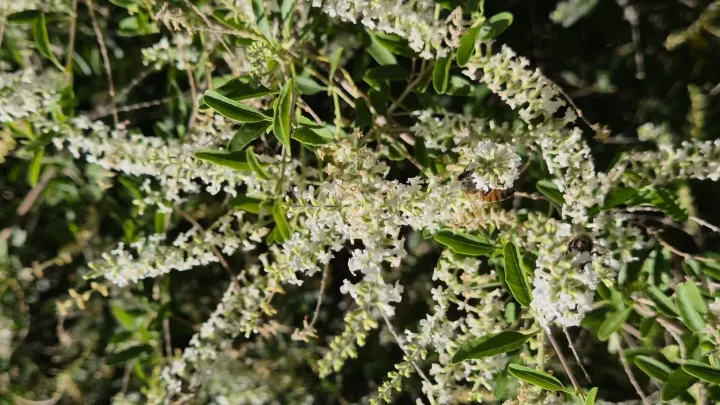
Description
Growing requirements
White brush (Aloysia gratissima) is a perennial shrub belonging to the Verbenaceae family. It is widely recognized for its spikes of tiny, intensely fragrant white flowers that emit a pleasant vanilla or almond-like scent.
Native to the Americas, ranging from the southern United States to Argentina, the plant is well-adapted to varied environmental conditions. It thrives in full sunlight and requires well-drained soil, making it suitable for xeriscaping in warmer climates.
The cultural requirements include a preference for loose, sandy, or loamy soil with sufficient nutrient content. While it possesses notable drought tolerance once established, consistent moisture during the initial growth stages significantly enhances the overall vitality of the shrub.
Management practices should include annual pruning to maintain a manageable shape and encourage a more prolific display of flowers. Growers should monitor nutrient levels, applying balanced fertilizers if the soil lacks organic matter or to boost blooming intensity.
In agricultural practice, this species is highly valued as a nectar-rich honey plant. It serves as an excellent resource for commercial beekeeping, often planted near apiaries to support healthy honeybee populations throughout the flowering season.
Main diseases and pests
The primary threats to Aloysia gratissima include spider mites and mealybugs, which are particularly problematic in arid conditions or when the plant is kept in poor ventilation environments.
Root rot caused by Phytophthora or Pythium species is a significant concern if the soil remains waterlogged. Proper site selection and soil aeration are the most effective preventative measures against these common fungal pathogens.