
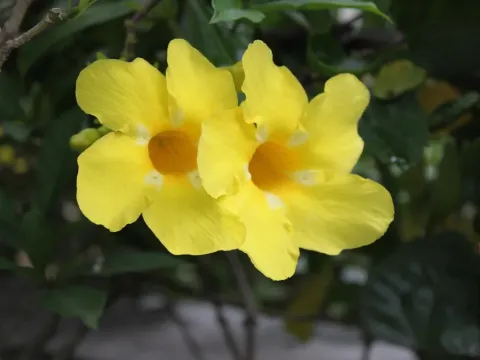
Allamanda
Allamanda
Allamanda is a genus of evergreen tropical plants belonging to the Apocynaceae family. Known for their vibrant, trumpet-shaped flowers, these plants are primarily cultivated as woody vines or shrubs. They are highly prized in horticulture for their decorative appearance and rapid growth rate in favorable environments.
What the section contains

Allamanda
The plant originates from the tropical regions of the Americas, specifically Brazil. In its natural habitat, Allamanda thrives in humid, sunny conditions, often found growing along riverbanks or in forest clearings where it can climb over surrounding vegetation to reach the sunlight it requires for bloom production.
Climate requirements for Allamanda are strict: it is a heat-loving plant that cannot survive freezing temperatures. In agricultural or ornamental settings, it must be kept in regions with tropical or subtropical climates, or cultivated in controlled environments like greenhouses where temperatures remain consistent throughout the year.
Soil management is critical for Allamanda health. It requires a fertile, well-draining substrate that retains moisture without becoming waterlogged. Growers often use a mixture of potting soil, peat moss, and perlite to ensure the roots receive adequate aeration while maintaining the necessary nutritional levels for flowering.
Economically and horticulturally, Allamanda is utilized for landscape design and urban beautification. It serves as an excellent choice for vertical gardening, covering fences, pergolas, and trellises. Its vigorous growth and aesthetic appeal make it a popular plant for public parks and private gardens in tropical zones.
Allamanda plants are susceptible to common pests such as spider mites, mealybugs, and scale insects. These pests often congregate on the undersides of leaves or along the stems, feeding on sap and weakening the plant. Regular monitoring and, if necessary, the use of insecticidal soap can effectively manage these infestations.
Regarding diseases, the most significant threat is root rot, which occurs primarily due to overwatering or poor soil drainage. Another concern is fungal infection, such as powdery mildew, which can develop in high-humidity areas with stagnant air, necessitating proper spacing and improved ventilation for healthy growth.