
Allamanda
Allamanda cathartica L.
Description
Growing requirements
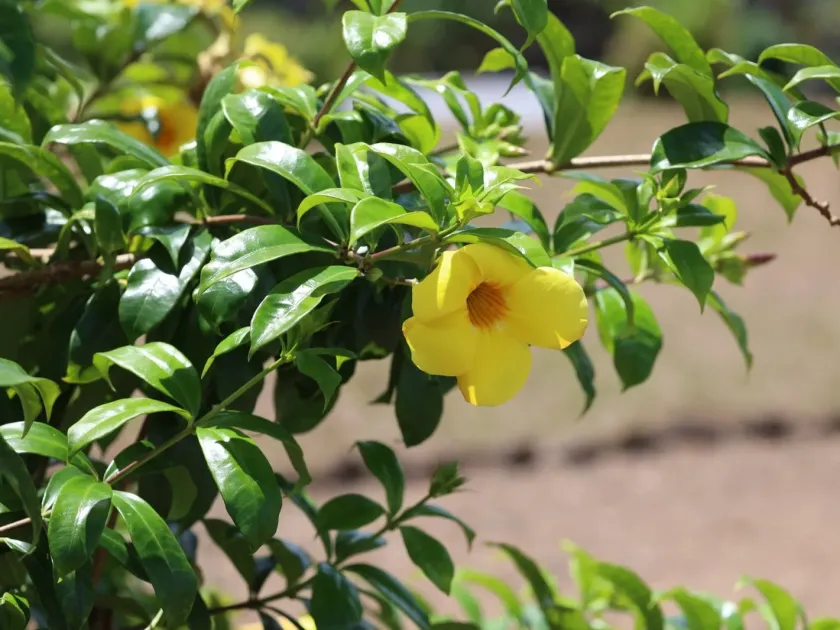
Allamanda cathartica L., commonly known as the golden trumpet, is a vigorous evergreen climbing shrub belonging to the Apocynaceae family. It is prized for its large, trumpet-shaped, vibrant yellow flowers that bloom throughout the warm season.
Native to Brazil and the Guianas, this plant thrives in tropical and subtropical regions globally. It is widely cultivated for landscape design, serving as an excellent choice for arbors, fences, and wall coverings due to its rapid growth habit.
The plant requires a strictly tropical climate to prosper, characterized by high humidity and consistent temperatures. It is highly intolerant of frost, requiring greenhouse protection or indoor cultivation in cooler temperate zones to avoid plant mortality.
In terms of soil, Allamanda prefers a rich, well-draining loamy medium with a slightly acidic pH. Consistent soil moisture is essential during the active growing season, though it is important to prevent waterlogging, which can cause severe root stress.
Optimal agrotechnical practices include annual pruning to maintain shape and promote flowering on new growth. Regular fertilization with a balanced mix high in phosphorus is recommended to sustain the plant's metabolic demands during its intense blooming cycle.
Main diseases and pests
The primary pests affecting this crop include spider mites, mealybugs, and scale insects. These pests often proliferate in environments with poor air circulation, necessitating frequent monitoring and the application of horticultural soaps or neem oil.
Fungal issues, such as root rot and leaf spot, are prevalent when the plant is kept in overly wet or poorly ventilated conditions. Maintaining proper drainage and reducing water frequency during the dormant period is vital for disease prevention.