
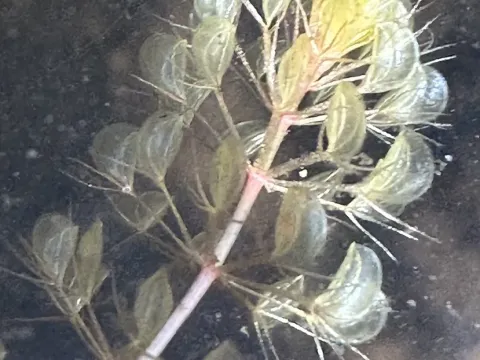
Waterwheel plant
Aldrovanda
Aldrovanda vesiculosa, commonly known as the waterwheel plant, belongs to the Droseraceae family. It is a rootless, free-floating aquatic plant that utilizes sophisticated snap-traps to capture small aquatic prey.
What the section contains

Waterwheel plant
The plant is highly sensitive to water chemistry. It thrives in slightly acidic water with a pH range of 6.0–7.0. It requires water that is very low in mineral content, ideally soft water or rainwater treated with peat.
Consistent light is essential for the healthy development of its whorls. It requires bright, indirect sunlight for at least 10 hours a day to maintain vigor and prevent the stems from becoming thin and etiolated.
Temperature management is vital; during the growing season, the water should stay between 20°C and 30°C. In the winter, the plant requires a dormant period at lower temperatures to produce resting buds called turions.
The setup should simulate a stagnant, shallow marsh environment. Using an inert medium like peat substrate at the bottom of the container helps to stabilize the water chemistry and sustain the plant's health.
The cultivation of the waterwheel plant is primarily practiced by botanical gardens, carnivorous plant hobbyists, and researchers. It has no standard agricultural use or commercial crop output.
Multiplication is exclusively vegetative. Healthy plants produce side shoots that can be separated, or the main stem may fragment naturally, with each healthy piece capable of developing into a new specimen.
Growth rate is heavily dependent on the availability of live prey. A steady supply of Daphnia or other small crustaceans is required to ensure rapid stem elongation and the production of new whorls.
In a controlled environment, yield is measured by the number of successful propagules or turions stored for the next season. The plant's expansion is physically limited by the surface area of the water container.
The efficiency of the culture relies on balancing the biological needs of the plant with the maintenance of water purity, as excess waste products can rapidly stifle growth.
The primary threat to the waterwheel plant is the overgrowth of algae. Filamentous algae can entangle the plant, blocking light and interfering with the mechanics of the snap-traps.
Pests such as certain aquatic snails and larvae may feed on the tender tissue of the whorls, causing significant damage to the plant's ability to feed and survive.
Chemical contamination, particularly high levels of fertilizer or alkaline minerals, causes rapid tissue necrosis. The plant has no mechanism to deal with mineral-rich water.
Lack of prey leads to starvation, which weakens the plant's defense mechanisms. A weakened plant is highly susceptible to bacterial and fungal infections that manifest as stem rot.
Mechanical disturbance can cause bruising to the delicate stems. Since the plant is non-rooted, any physical impact that breaks the stem can lead to the loss of the apical meristem.