
Aglaonema hybrid
Aglaonema rotundum N. E. Br. x Aglaonema simplex (Blume) Blume
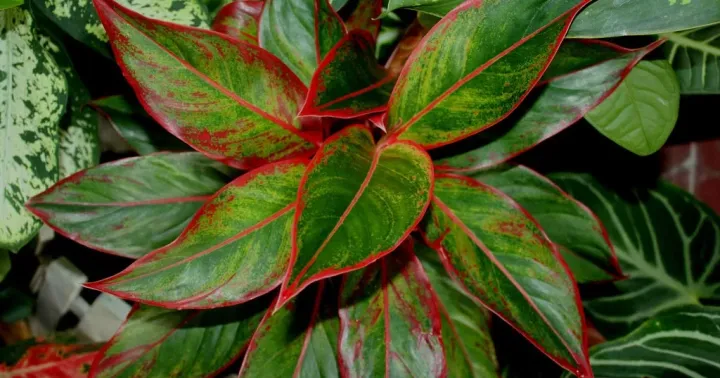
Description
Growing requirements
Aglaonema hybrid, derived from the crossing of Aglaonema rotundum and Aglaonema simplex, is a prominent ornamental foliage crop within the Araceae family. It is widely cultivated for its aesthetic leaf patterns and exceptional adaptability to indoor conditions.
Originating from the tropical rainforests of Southeast Asia, this hybrid thrives in environments characterized by filtered light and high humidity. Its botanical morphology includes a robust stem and ovate leaves, often exhibiting distinctive venation.
Optimal growth is achieved within a temperature range of 20°C to 25°C. The crop is highly sensitive to thermal shocks, thus maintaining a stable climate is essential for consistent foliage production and preventing stress-induced leaf abscission.
The substrate must provide excellent drainage and aeration. A mixture containing peat, perlite, and pine bark is recommended to promote vigorous root development and prevent physiological disorders associated with soil compaction.
Irrigation practices should be precise, following the wet-dry cycle of the growing medium. Over-watering is the most common cause of crop loss, as it leads to an anaerobic environment within the root zone, facilitating decay.
Main diseases and pests
The primary pests affecting Aglaonema hybrids include spider mites and mealybugs. These pests exploit low-humidity conditions to infest the underside of leaves and leaf axils, causing chlorosis and structural damage.
Fungal pathogens such as Pythium and Phytophthora are significant threats, particularly when environmental management fails. These pathogens target the root system, rapidly progressing to cause crown rot and plant death.
Integrated pest management (IPM) is crucial, focusing on maintaining optimal humidity and ensuring that all tools are sterilized between handling individual specimens. Early detection of infestation allows for targeted insecticide application.
Sanitation of the growing area is vital to minimize the recurrence of fungal outbreaks. Ensuring adequate spacing between plants allows for better air circulation, which significantly lowers the risk of disease spread.
Operators should wear protective gloves during cultivation processes, as the plant tissues contain calcium oxalate crystals, which can cause irritation to skin and eyes upon contact with the plant's sap.