
Acmispon subpinnatus
Acmispon subpinnatus
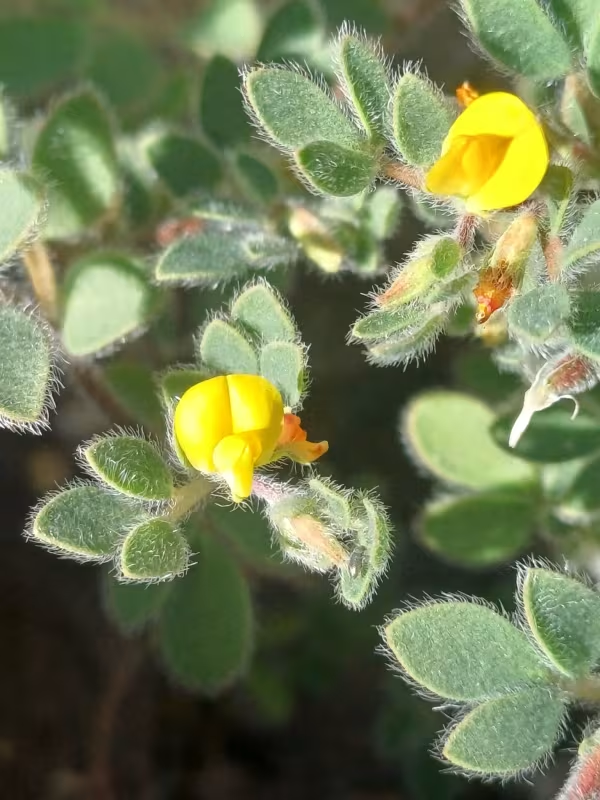
Description
Sowing dates
Acmispon subpinnatus is an annual legume species that demonstrates excellent adaptability to various environmental conditions. Its life cycle begins with germination in the early spring months.
The sowing process requires a well-prepared seedbed with fine soil structure. Seeds should be placed at a shallow depth to ensure they receive sufficient light for emergence.
It is recommended to sow when soil temperatures consistently reach the range of 12 to 15 degrees Celsius. Adequate soil moisture during the first few weeks is essential for uniform establishment.
Optimal planting density should be maintained to allow for proper airflow between individual plants, which reduces the incidence of soil-borne pathogens later in the season.
The crop can be drilled or broadcasted depending on the available machinery. After sowing, light compaction helps ensure good seed-to-soil contact for improved nutrient uptake.
Growing requirements
This species thrives in well-drained soils, showing a preference for sandy or light loamy textures. It performs poorly in heavy, waterlogged clay soils that lack proper oxygenation.
Acmispon subpinnatus is noted for its high tolerance to drought and heat, making it a suitable candidate for arid or semi-arid agricultural systems where other legumes might fail.
Exposure to full sunlight is a primary requirement for reaching maximum biomass production. Shaded areas often result in stunted growth and lower seed yield.
The plant is highly efficient in developing symbiotic relationships with nitrogen-fixing bacteria. This capability significantly improves soil health, providing a natural source of nitrogen for subsequent crops.
Minimal fertilization is required if the soil contains adequate levels of phosphorus and potassium, as the plant can effectively manage its nitrogen needs through biological fixation.
Main diseases and pests
Common threats to this crop include various root rot pathogens. These diseases typically manifest during periods of excessive rainfall or poor field drainage management.
Leaf-feeding insects can cause significant foliage damage during the active growing season. Regular field scouting is necessary to identify potential pest outbreaks early.
Weed management is most critical during the first month after emergence. Competing vegetation can severely restrict the growth rate of this legume if not controlled.
To maintain long-term crop viability, farmers should follow strict crop rotation practices to break the life cycle of soil-borne pathogens and pests associated with legumes.
Environmental stress, such as extreme late frosts or unusually high humidity, can predispose the plants to infections, necessitating integrated pest management strategies.