
Acmispon strigosus
Acmispon strigosus
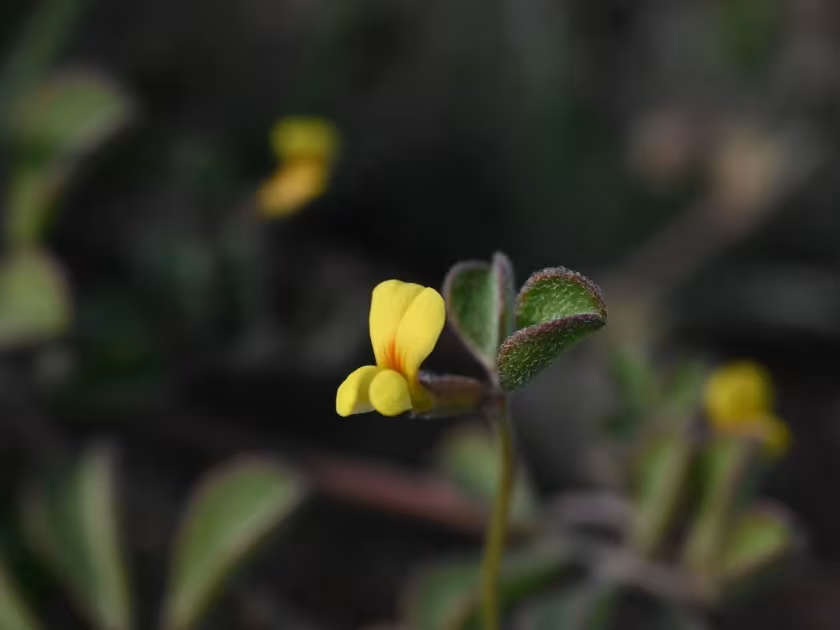
Description
Sowing dates
Acmispon strigosus thrives when sown before the onset of the wet season, allowing seedlings to establish roots before intense heat periods.
Seeds may require mechanical scarification to break dormancy and ensure high germination rates under field conditions.
Planting depth should be kept shallow, ideally between 1 and 2 centimeters, to facilitate emergence in sandy or light soil types.
Springtime sowing is generally recommended, ensuring the soil temperature is sufficiently warm to support rapid initial growth.
Weed management is critical during the first month, as the young plants grow slowly and can be easily outcompeted by invasive vegetation.
Growing requirements
This legume is highly adaptable to arid and semi-arid regions, showing exceptional resilience to prolonged drought and water scarcity.
The plant performs best in well-drained, sandy, or rocky soils, demonstrating a unique ability to survive in nutrient-poor environments.
Full solar exposure is necessary for healthy development, as shading inhibits vegetative growth and reduces the plant's nitrogen-fixing efficiency.
Acmispon strigosus maintains a symbiotic relationship with nitrogen-fixing bacteria, allowing it to thrive in soils with very low nitrogen availability.
It prefers a wide temperature range, typically between 15 and 30 degrees Celsius, and is well-suited for Mediterranean and desert-like climates.
Yield
The primary agricultural utility of this crop lies in its contribution to soil stabilization and the prevention of erosion on steep slopes.
It serves as an excellent ground cover, which helps in retaining soil moisture and creating a microclimate that benefits other native flora.
In grazing scenarios, Acmispon strigosus provides valuable forage that is accessible when other traditional fodder crops fail due to lack of rain.
Yield metrics are largely determined by the density of the stand and the presence of native pollinators that ensure successful seed production.
As a legume, it contributes significantly to increasing organic carbon levels in degraded soils over multiple growing seasons.
Main diseases and pests
Root rot is the most common disease encountered, particularly if the soil remains waterlogged for extended periods during the winter months.
Pests such as seed weevils can damage mature pods, potentially reducing the viable seed yield if not monitored during the reproductive phase.
Competition from aggressive non-native grasses is a major threat, requiring proactive weeding or controlled management strategies.
Fungal leaf spots may occur in areas with high humidity, though the plant is generally robust under arid conditions where such pathogens are rare.
Soil compaction represents an environmental threat that limits root penetration and the plant's ability to access deeper water tables.
Harvesting
Harvesting for seed production should be performed when the pods turn brown and begin to dry on the plant, signaling full maturity.
To prevent pods from shattering and dropping seeds prematurely, harvesting should occur during the early morning hours when humidity is higher.
Seed processing involves thorough cleaning to remove debris and drying to a stable moisture content to ensure longevity during storage.
If used for soil enrichment or grazing, the plant is typically left in the field to naturally decompose, replenishing soil nutrients.
Mechanical harvesting equipment should be calibrated for low-impact threshing to protect the integrity of the seeds from crushing.