
Acmispon americanus
Acmispon americanus
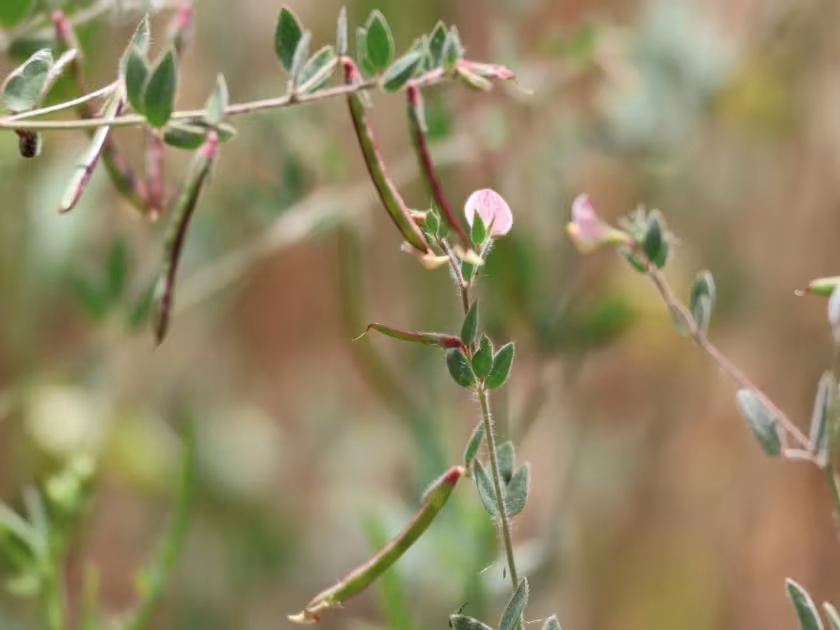
Description
Sowing dates
Acmispon americanus, formerly known as Lotus purshianus, is a legume species belonging to the Fabaceae family. It is an annual plant recognized for its nitrogen-fixing capabilities and soil improvement properties.
Sowing typically occurs in the spring when soil temperatures stabilize between 10 and 12 degrees Celsius. Optimal planting timing ensures that the seedlings have enough moisture to establish a robust root system.
Seeds should be planted at a depth of 1 to 2 centimeters to ensure proper germination. Good soil contact is essential for maintaining consistent moisture levels during the early stages of growth.
Seeding rates depend on the intended application, with higher rates used for permanent pastures and lower rates for seed production fields. The plant is known for its relatively quick germination under favorable conditions.
The species is well-adapted to various soil types, including disturbed or poorly developed soils, making it an excellent candidate for land reclamation and soil stabilization projects.
Growing requirements
The plant thrives in sunny, well-lit environments. It does not perform well in heavily shaded areas, where competition from taller vegetation can severely limit its growth and survival.
It prefers sandy or loamy, well-draining soils. While it can adapt to diverse soil conditions, it performs best in neutral to slightly acidic pH ranges, which support beneficial root bacteria.
One of the most significant traits of Acmispon americanus is its high drought tolerance. Its deep rooting system allows the plant to access moisture in deeper soil layers, even during dry seasons.
Areas with poor drainage or chronic waterlogging should be avoided, as the roots are susceptible to rotting. Selecting well-ventilated fields helps prevent root diseases and promotes overall plant vigor.
Minimal fertilization is required due to the plant's symbiotic relationship with nitrogen-fixing bacteria, though it benefits from balanced soil phosphorus levels to improve establishment.
Yield
As a forage crop, Acmispon americanus provides nutritious grazing for livestock. Its vegetation is high in protein, especially when managed correctly during the growth cycle.
Total biomass yields are highly dependent on annual rainfall and local climatic variables. In good conditions, the plant forms a dense cover, contributing significantly to pasture productivity.
When used in mixed pasture stands, it enhances the nutritional profile of the forage. Its ability to fix nitrogen also benefits neighboring grass species, leading to a healthier overall pasture ecosystem.
Beyond its feed value, it is a valuable tool for sustainable agriculture. It helps improve soil structure and increases the availability of nutrients for subsequent crops in a rotation.
Seed yields are generally consistent, provided the crop is managed to minimize losses during harvesting. High-quality seeds are vital for the next season's establishment.
Main diseases and pests
The primary threats include fungal diseases that may arise in humid, poorly ventilated areas. Proper site selection is the best preventative measure against these infections.
Pests such as aphids and various weevils can cause damage to tender shoots. Regular monitoring of the field is necessary to implement timely biological or mechanical control measures.
Overgrazing poses a serious risk to the long-term survival of the crop. Implementing a rotation schedule that allows the plant to recover and set seeds is crucial for sustainable management.
Chemical control should be approached with caution as the species is sensitive to certain herbicides. Focus should remain on preventative agronomic practices to maintain crop health.
Maintaining proper field density prevents the rapid spread of infections. Ensuring adequate air movement through the stand effectively mitigates the risk of most common foliar diseases.
Harvesting
Harvesting for hay should occur at the onset of flowering. This stage ensures the highest concentration of protein and minerals within the leaves and stems of the plant.
A moderate cutting height of 5 to 7 centimeters is recommended to allow for rapid regrowth of the plant after the primary harvest is completed.
Efficient drying is necessary when harvesting for hay to prevent leaf drop. Leaves contain the majority of the nutrients, and loss during mechanical handling significantly reduces the forage quality.
Seed harvesting should be timed carefully once the pods have matured and darkened. Specialized harvesting equipment should be used to minimize the risk of pod shattering and seed loss.
Post-harvest storage requires a cool, dry, and well-ventilated environment. Maintaining seed moisture levels below 14% is essential to ensure viability and prevent spoilage in storage.