
Blue speargrass
Aciphylla glaucescens
Description
Growing requirements
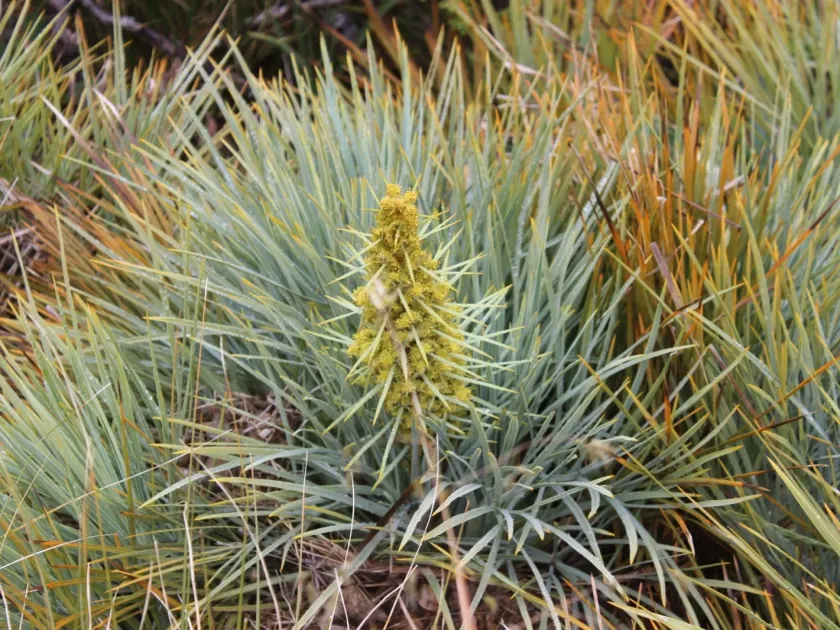
Blue speargrass (Aciphylla glaucescens) is a unique perennial species belonging to the Apiaceae family. It is endemic to New Zealand, where it typically inhabits alpine and subalpine zones. This plant is well-known for its striking architectural appearance, featuring rigid, glaucous, sword-like leaves arranged in a dense basal rosette.
The plant thrives in cool, well-drained environments that mimic its natural mountainous habitat. Because of its native origin, it is highly adapted to exposed locations with strong winds and high light intensity, which contributes to its distinct blue-grey coloration and waxy leaf cuticle.
Success in cultivation requires a substrate with excellent drainage, such as gritty soil or alpine-style compost. Avoiding wet winter conditions is critical for survival, as the plant is prone to root rot if the soil remains waterlogged for extended periods. It is highly suited for rock gardens and borders where soil is lean and sandy.
From an agricultural and horticultural perspective, Blue speargrass is utilized primarily for its ornamental value in landscape design. Its ability to maintain its structure throughout the year makes it a low-maintenance choice for gardeners looking to add texture and a unique focal point to their outdoor spaces.
General care involves minimal intervention once the plant is established. It is important to ensure the crown of the plant stays dry, especially during periods of high humidity or excessive winter precipitation. Fertilization should be kept to a minimum, as the plant is adapted to nutrient-poor soils and may become weak if overfed.
Main diseases and pests
The primary threats to Aciphylla glaucescens are centered around soil-borne pathogens and root rot. In poorly drained soils, fungal infections can quickly compromise the integrity of the basal rosette, leading to sudden decline. Ensuring a top-dressing of gravel around the plant's base helps manage moisture levels.
Regarding pest pressure, slugs and snails are the most common adversaries, particularly during the juvenile stages or damp seasons. They tend to seek shelter within the dense foliage, where they can feed on the tender heart of the plant. Regular monitoring and physical barriers are effective methods for mitigating these risks.