
Golden speargrass
Aciphylla aurea
Description
Sowing dates
Aciphylla aurea is primarily propagated from seed. Freshly harvested seeds should be sown in autumn to allow for natural stratification, which is essential for uniform germination in spring.
Use a gritty, well-draining sowing medium to replicate the rocky alpine slopes of its native habitat. Maintain consistent but moderate moisture levels, avoiding heavy watering that could drown the seeds.
Seedlings develop slowly during their first year. It is advisable to keep them in pots for at least one full growing season to monitor their development and protect them from environmental stress.
When the plants reach a sufficient size, they should be transplanted carefully into a permanent, sunny location. Avoid disturbing the roots, as the plant is sensitive to transplant shock.
Spacing between plants should be generous to ensure adequate airflow, which is critical for preventing moisture-related issues and ensuring the plant maintains its structural beauty.
Growing requirements
Golden speargrass is a member of the Apiaceae family, native to the alpine and sub-alpine regions of New Zealand. It is highly adapted to high-altitude environments characterized by thin soils and cool winds.
The plant thrives in mineral-rich, stony soils with excellent drainage. It performs best in sites where water can quickly pass through the profile, preventing the roots from staying waterlogged for long periods.
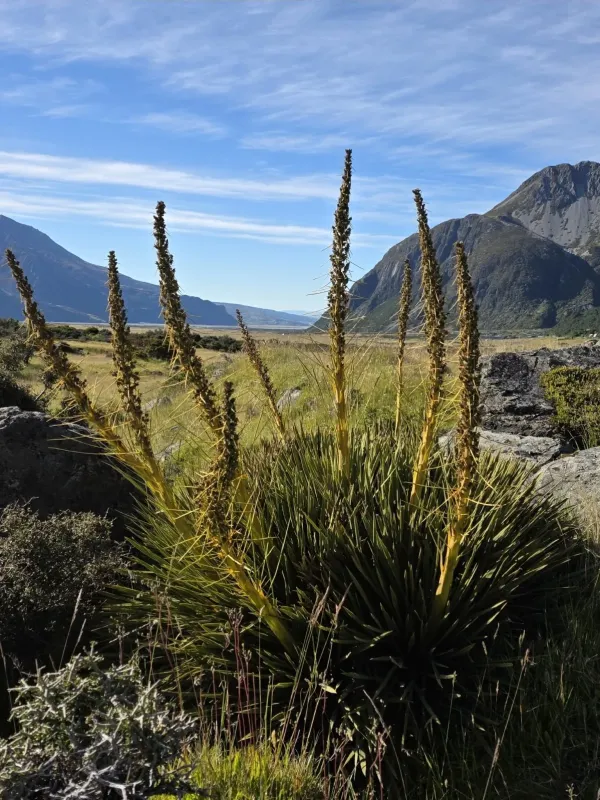
Botanically, it features stiff, spine-tipped leaflets arranged in large basal rosettes. The golden-yellow hue of the foliage is a key aesthetic feature, especially during the active growth phase.
In terms of light, Aciphylla aurea requires full sun exposure to maintain its compact and robust form. However, it benefits from light shade during the peak heat of summer in lowland regions.
Maintenance involves very light feeding, if any at all, as this species is adapted to nutrient-poor soils. Over-fertilization can result in weak, floppy growth and reduced hardiness.
Main diseases and pests
Root rot is the most common issue for Aciphylla aurea, particularly during wet winters when cold, stagnant water can cause the crown of the plant to decay.
Pests such as slugs and snails are problematic for young rosettes. Physical barriers like crushed rock around the base can help deter these mollusks and also provide a cleaner environment for the foliage.
In humid or stagnant air, fungal pathogens may cause spotting on the leaves. Good site selection, which provides constant air movement, is the primary preventative measure.
Extreme summer heat can stress the plant, leading to brown tips on the leaves. Providing a cool root run using gravel mulch is highly recommended for keeping the root zone at an appropriate temperature.
Monitor plants closely for any signs of decay, particularly at the base of the rosettes. If issues are spotted, remove affected foliage immediately to maintain the overall health of the specimen.