
Drummond's wattle
Acacia drummondii
Description
Sowing dates
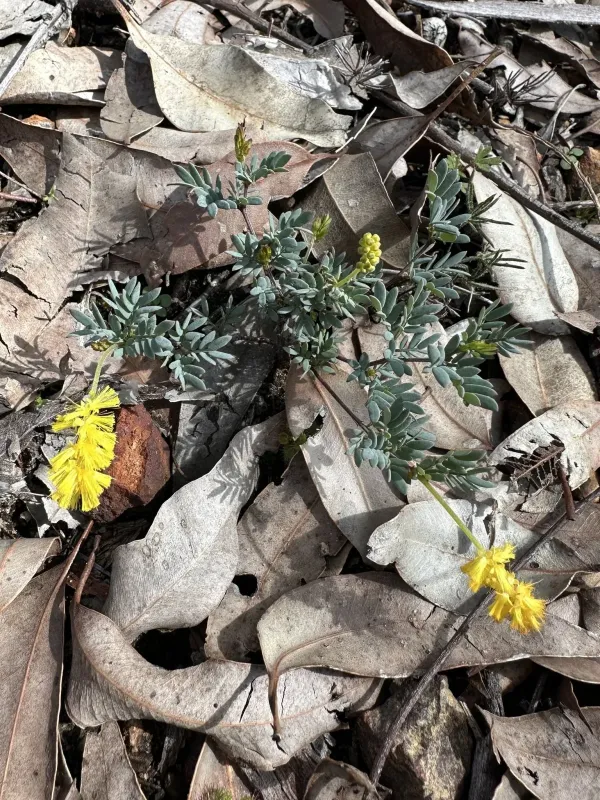
Drummond's wattle (Acacia drummondii) is a perennial shrub belonging to the Fabaceae family. While primarily an ornamental species, it is a significant member of the Acacia genus known for its distinct foliage and flowers.
Propagation is typically achieved through seeds, which must be scarified to break dormancy. Soaking seeds in hot water for several hours is a standard practice before planting in a loose, well-draining potting mix.
Sowing should take place in a greenhouse or a climate-controlled area during late winter or early spring. Consistent moisture and a steady temperature are vital for a successful germination process.
Seedlings develop relatively slowly and require gentle handling during transplanting. It is advisable to use individual containers to prevent root entanglement and ensure each plant develops a strong root system.
Transplanting into the permanent garden location should occur only when the soil has warmed up and all risks of frost have passed to ensure the establishment of the shrub.
Growing requirements
Acacia drummondii is native to Western Australia and thrives in environments characterized by bright, direct sunlight. Full sun exposure is essential for maintaining its compact growth habit and floral abundance.
The plant demands excellent soil drainage. It performs best in sandy or gravelly loam soils with a slightly acidic to neutral pH, mimicking its natural habitat conditions.
Water requirements are moderate; while the plant exhibits good drought tolerance once mature, young specimens require consistent watering during their first growing season to establish deep roots.
Regarding climate, this species is not suited for areas with prolonged freezing temperatures. It prefers mild winter conditions and should be protected from harsh winds and extreme frost in colder regions.
Pruning is recommended after the flowering period to maintain the shrub's shape and encourage denser growth. Avoiding heavy, unseasonal pruning helps keep the plant healthy and vigorous.
Main diseases and pests
Root rot is the most serious threat, usually caused by overwatering or soil compaction. Keeping the drainage clear and ensuring the soil surface dries slightly between waterings is essential.
Pests such as mealybugs and spider mites are common in drier, indoor or sheltered environments. These pests can weaken the plant by feeding on the sap of young stems and leaf undersides.
Fungal issues, including mildews, can arise if the planting density is too high, preventing proper air circulation. Maintaining proper spacing between plants is a key preventive cultural practice.
Nutrient deficiency, specifically iron chlorosis, can occur in alkaline soils, leading to yellowing of the foliage. Applying chelated iron supplements can help rectify this issue effectively.
Monitoring the plant for signs of stress is crucial. Any visible webbing, sticky residue on leaves, or sudden leaf drop should be addressed immediately with organic or systemic control measures.