
Western silver wattle
Acacia decora
Description
Growing requirements
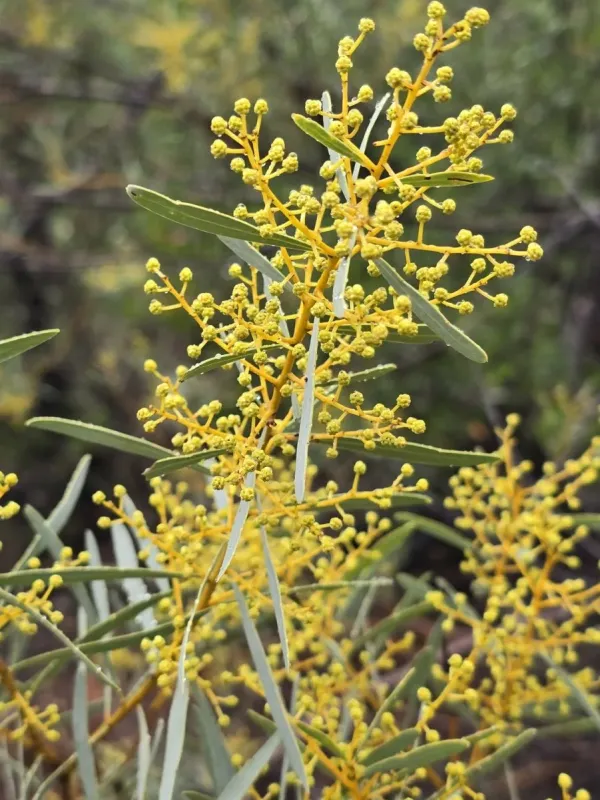
Acacia decora, commonly known as the Western silver wattle, is an evergreen shrub belonging to the Fabaceae family. It is distinguished by its graceful, pendulous branches and striking bright yellow globular flower heads that appear during the flowering season.
Originating from the eastern regions of Australia, this species is naturally adapted to dry sclerophyll forests and rocky outcrops. Its biological success in such environments is attributed to its phyllodes, which are modified petioles that perform photosynthesis while minimizing water loss.
Cultivation requires well-draining soil with a neutral to slightly acidic pH level. It thrives in sunny locations where it can receive direct sunlight for most of the day, which is essential for maintaining a compact and healthy growth habit.
The plant demonstrates good drought tolerance once established, making it a sustainable choice for xeriscaping and low-maintenance landscaping. However, supplemental irrigation is necessary during the initial stages of establishment in young specimens.
Economically, it is valued as an ornamental garden plant and is also used for soil stabilization in land reclamation projects. Its ability to thrive on poor soils makes it an excellent candidate for restoring degraded landscapes in arid or semi-arid climates.
Main diseases and pests
Common pests include scale insects and mealybugs, which can cluster on the stems and phyllodes, extracting sap and weakening the plant. Regular monitoring and the application of horticultural soaps are recommended for effective pest management.
Fungal pathogens such as Phytophthora or various leaf spot fungi may emerge if the soil remains waterlogged or if there is insufficient air circulation. Maintaining proper spacing and ensuring excellent drainage are the primary defense strategies against these issues.