
Wiry wattle
Acacia coriacea
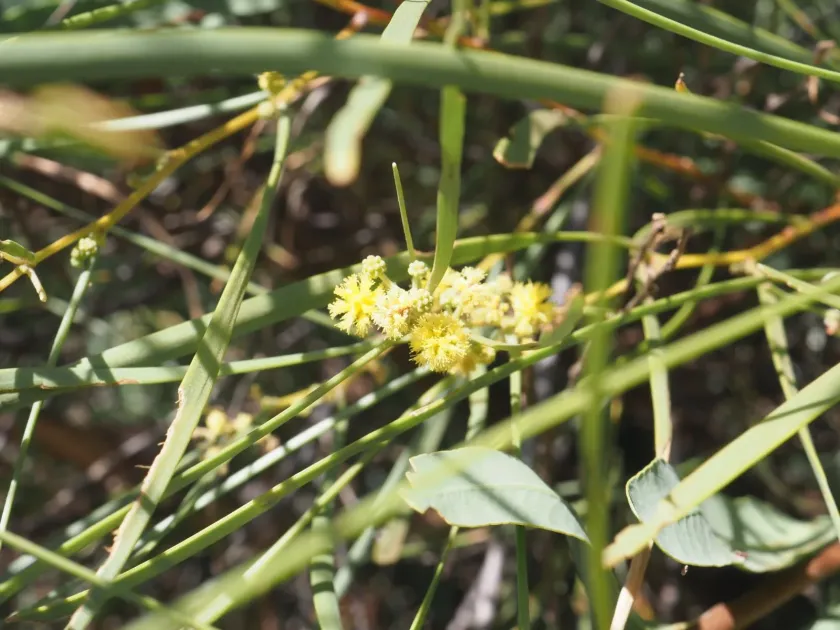
Description
Growing requirements
Wiry wattle (Acacia coriacea) is a prominent member of the Fabaceae family, native to the arid and semi-arid landscapes of Australia. Known for its leathery phyllodes, this species is highly adapted to conserve moisture, making it an essential plant for sustainable agriculture in water-scarce regions.
The plant thrives in sandy and well-drained soils, often colonizing degraded areas where other species fail to establish. Its root system is exceptionally deep, facilitating nitrogen fixation and contributing to the overall improvement of soil structure in desert environments.
Cultivation requires full sun exposure and minimal competition from weeds during the establishment phase. Once the plant develops a robust root system, it exhibits remarkable tolerance to heatwaves and extended drought periods, requiring little to no supplemental irrigation.
Agricultural management is focused on protecting young plants from herbivores and ensuring proper site selection with good drainage. The species is highly versatile, serving as a windbreak, a source of hard timber, and a potential candidate for agroforestry systems.
The seeds of Acacia coriacea are nutrient-dense and possess significant potential as a food crop or supplementary fodder. Historically utilized by indigenous populations, modern trials are exploring its capacity to support livestock feed production in marginal farming lands.
Main diseases and pests
Root rot is the primary physiological threat to Acacia coriacea, typically triggered by waterlogging in clay-heavy or poorly drained soils. Preventing soil saturation is essential for maintaining the health of the root system and preventing secondary infections.
Insect pests, such as aphids and scale insects, may target new foliage during the growing season. While mature trees are generally resilient, heavy infestations on saplings can significantly reduce the overall growth rate and vigor of the plant.
Browsing by livestock and feral animals poses a continuous risk to the canopy development. In agricultural settings, implementing physical barriers or using protective sleeves is a standard practice to ensure survival until the tree reaches a height beyond grazing reach.
Fungal leaf spots can occur under conditions of high humidity, particularly in stagnant air environments. Increasing plant spacing to ensure proper air circulation is a key cultural practice to mitigate the spread of leaf-borne pathogens.
Seed-feeding beetles represent a concern for seed production operations. Post-harvest management, including rapid drying and proper storage in pest-proof containers, is necessary to prevent significant losses of the seed crop to stored-product pests.