
Estimate 2026: How much does a complete turnkey roof replacement for a private house really cost?
Amid the turbulence of the construction market in 2024–2026, financial planning for major renovation of suburban real estate has become a task with many unknowns.
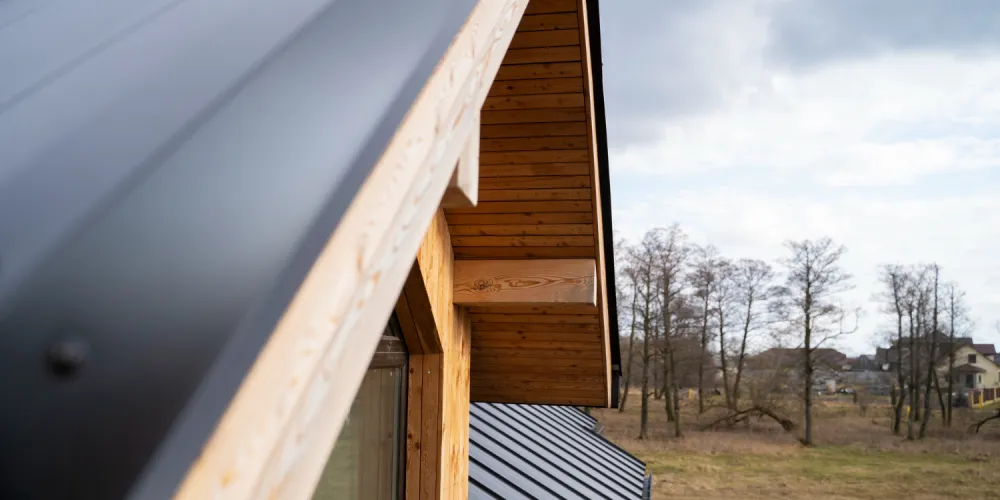
Amid the turbulence of the construction market in 2024–2026, financial planning for a major renovation of suburban real estate has become a task with many unknowns. According to independent analytics, the cost of roof reconstruction has increased by an average of 35% over the past three years.
The main mistake homeowners make is using the wrong approach to calculations. When property owners try to find out how much it costs to re-roof a house, they most often focus on the retail price of one square meter of metal roofing in a construction hypermarket. However, in reality, the final roofing material accounts for only a small part of the total bill.
A truly correct roof replacement from a technological point of view is a complex set of engineering works, including careful dismantling, restoration of the old wooden frame, proper building heat physics, and installation of safety systems.
This research material was prepared with the expert participation of engineers from the company Krovlya pod Klyuch, which is confidently ranked among the best roofing companies in Moscow and the Moscow region according to an analytical portal.
Which non-obvious stages form the real cost of reconstruction?
The financial model of a major renovation of suburban real estate differs radically from new construction because of the high costs of careful dismantling and restoring the geometry of the old frame. To understand the scale of investment, it is necessary to break down a classic estimate for an insulated mansard roof with an area of about 150 square meters.
Instead of relying on standard price lists, it is more reasonable to view the budget distribution through the share of each stage:
- Dismantling and disposal work from 10 to 15% of the budget: manual removal of the old covering, rental of specialized containers for transporting heavy construction waste.
- Lumber and remediation about 15-20% of the budget: purchase of kiln-dried edged boards for rafter reinforcement, timber for the ventilation gap, as well as chemical compounds for fire and biological protection of wood.
- Insulation roofing system about 15% of the budget: basalt insulation, superdiffusion membranes, primary-cycle vapor barrier films, and specialized sealing tapes.
- Final covering and additional elements about 25-30% of the budget: metal or bitumen shingles themselves, as well as valleys, ridge strips, drip edges, and roofing screws with EPDM washers.
- Installation work about 20-30% of the budget: payment for qualified engineering and manual labor that ensures compliance with construction standards and regulations.
Why does dismantling old slate or roofing felt consume a significant part of the budget?
Removing worn asbestos-cement slate or a multilayer bitumen carpet requires specialized safety technologies and exclusively manual labor, which rules out the use of heavy machinery.
Suburban houses built at the end of the last century are often covered with materials that have become extremely fragile over decades. Old slate must not be thrown off the roof, because sharp fragments can damage the building facade, break windows, and destroy landscaping, including paving, lawns, and flower beds.
Workers have to carefully remove each sheet, lower it with ropes, and manually stack it in containers. In addition, asbestos dust is toxic, which requires the crew to use personal protective equipment.
Logistics also add to the cost: ordering eight-cubic-meter containers for legal removal of construction waste to landfills in the Moscow region becomes more expensive every year.
How does the condition of the old rafter system affect the final bill?
Hidden defects in the load-bearing wooden frame, discovered only after the roof has been fully opened, can increase the initial estimate by one third because partial reinforcement of beams or replacement of the wall plate may be required.
A house is a living organism, and over 15-20 years of operation, wood is exposed to enormous loads. In the Moscow region, which belongs to the third snow load zone, up to 210 kilograms of snow per square meter can press on the roof. If the old roof did not have proper ventilation, condensation was absorbed into the rafter legs for years.
When the roof is opened, engineers often discover black mold that has turned cellulose into dust, or severe sagging of the ridge beam. Installing new metal roofing on a crooked frame is strictly prohibited, because rigid sheets will not align in the locks and the roof will leak.
This creates the need to level the roof slopes by extending boards, installing additional struts, or completely replacing rotten elements. These unforeseen carpentry works and the purchase of additional timber naturally increase the project cost.
How much does a reliable roofing system cost, and why should films not be bought on sale?
The thermal safety of the mansard floor directly depends on the quality of superdiffusion membranes and the density of basalt insulation, which account for about fifteen percent of the total budget.
The roof of a modern suburban house must not only keep water out from the outside but also effectively remove vapor from the inside. The main mistake in budget repairs is the use of cheap polyethylene films and ordinary office tape.
- A vapor barrier is installed on the side of the living space. Its task is to completely cut off moist indoor air from the insulation. The joints must be sealed with expensive butyl rubber or acrylic tapes.
- Insulation, with the Moscow region standard being 200 mm of basalt wool, is laid crosswise to cover cold bridges along wooden rafters.
- On the outside, above the insulation, a high-tech superdiffusion membrane is rolled out. Unlike cheap microperforated film, it releases vapor from mineral wool but does not allow drops of condensation from the metal to pass through. Saving on this membrane leads to wet insulation, which loses half of its heat-saving properties at only 5% moisture.
Why pay for counter-batten timber if roofs used to be built without it?
Creating a ventilation gap with wooden counter battens is an essential technological requirement for removing condensation from the inner side of any metal covering.
The physics of the process, known as the dew point, is unforgiving: when the roof metal is icy in winter and residual heat seeps from under the insulation, water forms abundantly on the inside of the roofing metal. To prevent this water from rotting the wooden battens, a 50x50 mm timber is fixed along the rafters directly over the waterproofing membrane.
It raises the step battens and creates an air channel. Air enters under the eaves overhang, rises upward, and exits through a special ridge aerator, carrying all moisture away. Refusing counter battens to save a cubic meter of timber leads to through corrosion of metal roofing and complete frame rot within 3-5 years.
Where can you save money when choosing the final material: metal versus bitumen?
The choice between steel metal roofing and flexible multilayer bitumen shingles should be based not only on aesthetic preferences but also on the architectural complexity of the slopes, which directly determines the percentage of non-reusable waste.
Metal roofing is an excellent and economical choice for simple gable roofs. However, it is important to pay attention to technical characteristics: the steel thickness should be at least 0.5 mm, and the protective zinc layer should start from 275 g/m² for maximum durability. If the roof is complex, with many breaks, dormers, and bay windows, sheet metal becomes uneconomical. Because of the directional wave pattern, offcuts cannot be used on other slopes, and up to 40% of the purchased material may end up as waste.
In this case, flexible bitumen shingles are financially justified. Yes, they require the installation of an expensive solid deck made of OSB-3 boards and underlayment carpets. But the waste percentage for small-piece bitumen on complex geometry is only 3-5%. As a result, the initial overpayment for sheathing is fully compensated by savings on the roofing material itself.
Why do additional elements often cost more than the covering sheets themselves?
Equipping architecturally complex roofs with valleys, ridge strips, drip edges, and chimney junction systems creates a hidden expense item that can significantly exceed the cost of flat metal.
Customers often forget that a roof is not just a flat rectangle. Any roofing system is vulnerable where the continuous covering is interrupted.
- Drip edges, or eaves strips, are needed to direct condensation from the membrane strictly into the gutter.
- End strips, also known as wind boards, protect side edges from sheets being lifted by strong wind and from slanting rain penetration.
- A valley, the inner angle where roof slopes meet, is the most metal-intensive and responsible junction. A continuous waterproofing layer, a lower decorative strip, and an upper cover strip are installed there.
These shaped elements cannot be refused, because without them the roof will lose its watertightness during the first heavy rain.
Gutters and snow guards: necessary expenses or imposed marketing?
The integration of tubular snow guards and metal gutter systems is a critically important engineering measure for protecting the foundation, paving, and basement of the building from destruction caused by meltwater flows.
Moscow winters often bring surprises in the form of sudden thaws. From the smooth surface of a metal roof, heavy wet snow slides down like an avalanche. This icy mass weighing several hundred kilograms can rip gutters out by the roots, destroy plantings around the house, and cause serious injuries to people. Tubular snow guards installed along the perimeter of the eaves cut the snow layer, allowing it to melt gradually.
The gutter system, in turn, collects water and directs it through pipes far away from the foundation. If water simply falls from the roof, it cuts trenches into the soil, while excessive moisture under the foundation in winter leads to frost heave, house distortion, and cracks in the walls.
How much do professional crew services cost, and why do generalists end up being more expensive?
Hiring specialized roofers with a narrow professional focus guarantees precise compliance with technological standards, eliminating the risk of major reconstruction due to vapor barrier errors or improper cutting of roofing metal.
Professional manual labor in the Moscow region is valued highly, and there is a logical reason for this. True craftsmen use expensive specialized tools. For example, they never cut metal roofing with an angle grinder, because sparks burn out zinc and polymer coating, causing immediate corrosion. Instead, they use electric nibblers that provide a cold cut.
In addition, legitimate companies carry legal responsibility. By signing a contract, the company undertakes to eliminate any leaks free of charge within the warranty period, usually from 3 to 5 years. General-purpose crews that take on tile installation, foundation pouring, and roof repairs at the same time often disappear immediately after receiving payment, leaving the owner alone with wet insulation and rotting rafters. The difference in labor cost between professionals and amateurs is the best insurance against catastrophic financial losses in the future.
Frequently Asked Questions
Can new metal roofing be installed over old slate or roofing felt?
Technically, installing a new covering over the old one is possible by adding extra battens, but professionals strongly do not recommend this method. The old covering does not allow inspection of rotting rafters, while old roofing felt creates a vapor-tight barrier that disrupts ventilation and causes destructive condensation to accumulate inside the structure.
Why can roof repair be cheaper in winter, and is it safe?
In winter, the construction market experiences a decline in activity, so material suppliers often offer seasonal discounts, and professional crews reduce installation rates. Carpentry work and metal roofing installation at below-zero temperatures are completely safe, while the main advantage is the absence of autumn rains, which protects the opened house from accidental flooding.
How can materials be calculated correctly to avoid overpaying?
Calculating the roof area independently with a tape measure often leads to critical errors. Roofing metal has a directional wave pattern and rigid geometry. An accurate sheet layout calculation is performed only in specialized computer programs that engineers use to minimize the percentage of non-reusable waste, especially on complex hip roofs.
What should be done if heavy rain starts during roof replacement?
A qualified crew never dismantles the old covering from the entire roof area at once when the weather forecast is unstable. Work is carried out in sections: part of the old covering is removed, rafters are restored, and the area is immediately covered with a waterproofing membrane. In addition, large emergency tarpaulin covers must always be available on site to protect the building quickly.
How many years does inexpensive metal roofing last in the Moscow region climate?
The actual service life directly depends on the thickness of the steel core and the galvanizing class. Budget metal roofing with a thickness of 0.4 mm, a zinc layer of 100 g/m², and cheap polyester coating will begin to develop rusty corrosion spots on cuts and screw fastening points after just 5-7 years of use, requiring regular maintenance and repainting.
Editorial team agronom.info
Materials are prepared by the portal's agronomists and editors. We use only trusted sources: Ukrainian agricultural universities, variety registries, open scientific publications.
Related articles
Not yet comments. Be the first!
Comments