
Description
How to tell it apart
The amphibious bistort is a perennial herbaceous plant belonging to the Polygonaceae family, known for its remarkable ability to adapt its physical form to its environment.
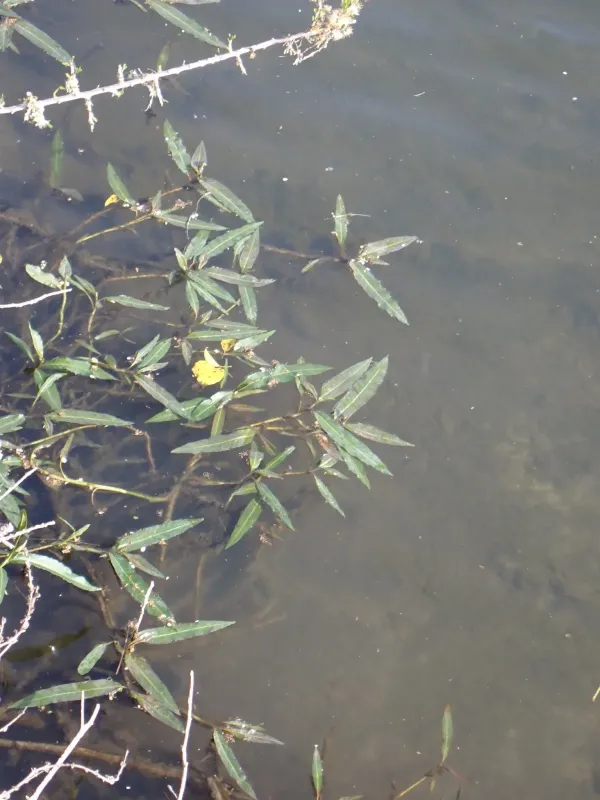
When growing on land, it develops erect, hairy stems with lanceolate leaves; in water, the plant shifts to floating leathery leaves and long, submerged stems capable of reaching several meters.
The root system is the defining characteristic of this weed, consisting of robust, branching rhizomes that penetrate deep into the soil, storing energy and supporting rapid regrowth.
The flowers are small, bright pink or reddish, arranged in dense spikes that appear at the stem tips during the summer months, providing a clear visual marker for identification.
Although it produces viable seeds, it primarily spreads through fragmentation of its rhizomes, which can remain dormant in the soil and sprout under favorable conditions.
Where it grows
As the name suggests, this plant is a hydrophyte, frequently found along riverbanks, ponds, and wetlands, but it also thrives in poorly drained agricultural fields.
In modern farming, it has become a troublesome weed in reclaimed peatlands and low-lying areas where high water tables create persistent moisture that favors its growth.
It often infiltrates cereal and vegetable crops, especially in soils that are heavy or susceptible to waterlogging, outcompeting crops that struggle in anaerobic soil conditions.
The species displays high ecological plasticity, allowing it to survive when fields are drained and transitioned into traditional dry-land farming environments.
Its persistence is rooted in the rhizomes' ability to withstand varying water levels, making it a difficult weed to manage even after significant land improvement efforts.
Harm it causes
The amphibious bistort poses a major threat to agricultural productivity by forming dense, tangled mats that crowd out crops and steal vital sunlight from young plants.
Its extensive rhizome network acts as a nutrient sink, depleting the soil of moisture and minerals, which directly limits the growth potential of neighboring crop species.
The weed acts as a host for various fungal and viral pathogens, creating a reservoir of disease that can easily spread to nearby cash crops, reducing overall yields.
The presence of this weed creates physical obstacles during field operations, leading to higher fuel consumption and increased mechanical wear on harvesting equipment.
Harvested crops contaminated with fragments of the amphibious bistort require intensive post-harvest drying and mechanical cleaning, which adds significant costs to processing.
How to control
The most effective strategy for long-term management is the improvement of field drainage systems, as lowering the water table reduces the weed's competitive advantage.
Deep plowing with soil inversion is recommended to bury rhizomes, which exhausts the plant's energy reserves and prevents it from reaching the surface to photosynthesize.
Mechanical control through repeated harrowing and cultivation during the fallow period is essential to break up rhizomes and prevent the spread of the vegetative segments.
Chemical control relies on the use of systemic herbicides that are absorbed by the leaves and transported to the roots to ensure the complete destruction of the underground system.
- Application of glyphosate-based herbicides on fallow land after harvest.
- Selective herbicide use within growing crops according to specific label rates.
- Integration of crop rotation to break the cycle of infestation.
- Maintaining healthy, dense crop stands to naturally suppress weed development.
- Strict equipment hygiene to prevent the spread of rhizome fragments between fields.
Content graph
Connections · Amphibious bistort
Most often together:
Marketplace
Products · 1
Biology
Taxonomy
- Latin name
- Polygonum amphibium
- Family
- Прочие
- EPPO code
- POLAS