
Meadow knapweed
Centaurea debeauxii
Description
How to tell it apart
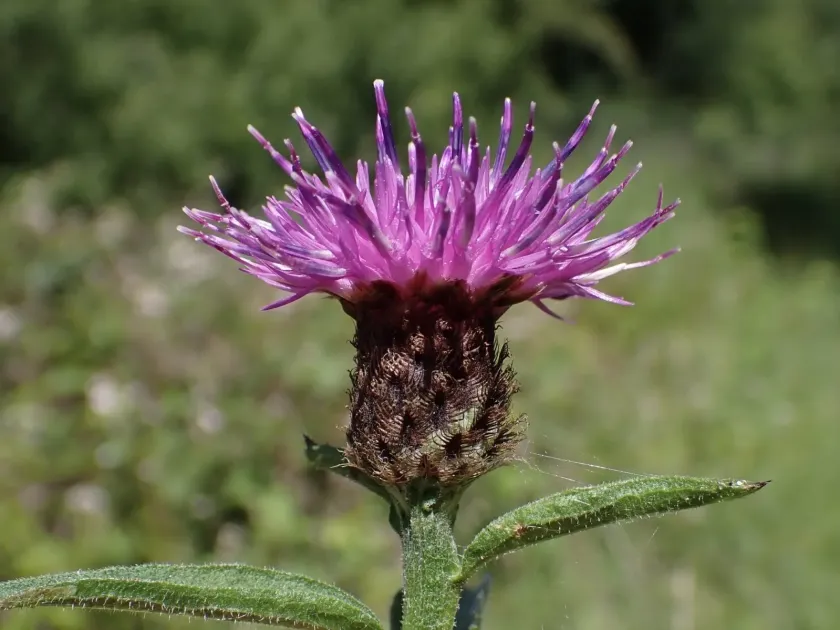
Meadow knapweed (Centaurea debeauxii) is a perennial herbaceous plant from the Asteraceae family, often noted for its invasive potential in various habitats.
The plant is characterized by a deep, persistent taproot system that enables it to survive frequent mechanical disturbance and drought.
Its stems grow upright with distinct leaves, often covered with fine hairs, which help the plant retain moisture in dry conditions.
The flowers are arranged in typical knapweed heads, producing large quantities of seeds that ensure widespread dispersal across fields.
This species is highly resilient and can regenerate from small segments of the root system, making manual removal difficult.
Where it grows
This weed typically occupies meadows, pastures, roadside verges, and fallow land, preferring fertile and moderately moist environments.
In agricultural settings, it frequently invades hay fields and permanent pastures, competing directly with productive forage species.
It also appears in grain fields, especially in areas where minimum tillage practices are employed without sufficient chemical control.
The spread of meadow knapweed is facilitated by human activities, including the movement of contaminated farm machinery and equipment.
It establishes well in disturbed soils and can dominate if the primary vegetation cover is weakened by grazing or improper management.
Harm it causes
The primary damage caused by meadow knapweed is the resource competition, where it depletes soil moisture and nitrogen to the detriment of crops.
When present in hay production, the weed reduces the quality and palatability of the forage, as livestock tend to avoid the tough stalks.
Its deep root system creates significant moisture stress for cereal crops, directly resulting in yield reductions during periods of low rainfall.
Mechanical harvesting becomes less efficient due to the dense stands of the weed, leading to higher operational costs and potential machinery damage.
Contamination of harvested grain with knapweed seeds poses a risk for crop purity, necessitating extra processing stages for seed certification.
How to control
Cultural control measures, such as intensive deep plowing, are crucial to disrupt the root systems and limit the regeneration capacity of the plant.
Mowing before the flowering stage is essential to break the reproductive cycle and prevent the accumulation of a seed bank in the soil.
Chemical control requires the use of systemic herbicides that are effectively translocated into the root system to kill the plant entirely.
Applying herbicides during active growth stages maximizes efficacy and ensures that the perennial structures are adequately targeted.
Integrated weed management, including competitive crop rotations and proper field maintenance, is recommended to keep populations below threshold levels.
Taxonomy
- Latin name
- Centaurea debeauxii
- Family
- Прочие
- EPPO code
- CENDX