

Galera 334 SL
Доу АгроСайенсіс С.А.С., Друзенхайм, Франція
Herbicides
0
0
·
2.6K
4 offers
14.3 €per 1 l
Buy
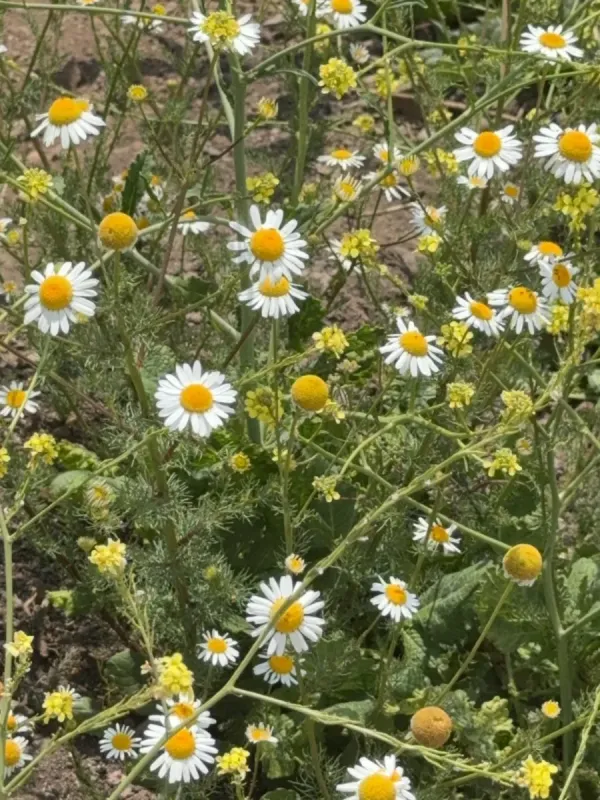
Scented mayweed (Matricaria chamomilla) is an annual herbaceous plant belonging to the Asteraceae family, often problematic in agricultural settings.
The plant grows a branched, erect stem reaching 20–60 cm in height, characterized by fine, feathery, alternate leaves that are deeply divided.
The inflorescence consists of daisy-like flower heads. A key diagnostic feature is the conical and hollow receptacle, which distinguishes it from other similar-looking weeds.
The flower head has white ray florets that curve downwards as the flower matures, surrounding a bright yellow center composed of disk florets.
The plant spreads solely via seeds, with a single specimen capable of producing thousands of tiny seeds that can persist in the soil seed bank for several years.
Scented mayweed is widely distributed and thrives in a variety of environments, particularly favoring fertile, moist, and well-lit soils.
It frequently invades winter and spring cereal crops, often flourishing in fields where the canopy has not yet closed, allowing it to compete for space.
It is commonly found along field margins, road verges, and waste areas, which act as reservoirs for weed seeds to disperse into adjacent agricultural plots.
The species demonstrates high environmental plasticity, enabling it to establish successfully even in compacted soils or areas with poor structure.
As a cool-season weed, it often germinates early in the spring, allowing it to gain a head start over crop seedlings in emerging fields.
The primary damage caused by this weed is the direct competition for soil moisture, light, and nutrients, which can significantly stunt the growth of young crops.
Infestation by Scented mayweed reduces the overall yield potential by inhibiting tillering in cereals and causing localized patches of crop failure.
High densities of the weed complicate harvesting processes, increasing the amount of trash in the grain and raising the moisture content of the harvested yield.
Contamination of harvested grain with weed seeds requires costly additional cleaning and drying, affecting the commercial value and purity of the commodity.
The weed can also serve as a secondary host for various pests and pathogens, increasing the overall phytosanitary burden on the farmland throughout the season.
Effective management requires a multi-faceted approach, starting with robust crop rotation to disrupt the life cycle of the weed and minimize seed bank replenishment.
Mechanical control, including early-season tillage or inter-row cultivation, is effective at eliminating seedlings before they become established and harden.
Chemical control is often necessary in heavy infestations, utilizing selective herbicides that target broad-leaved weeds during their vegetative growth stages.
Application timing is crucial; spraying should occur while the weed is in the rosette stage, as resistance increases significantly once the plant begins bolting.


