

Marsh cudweed
Gnaphalium palustre
Description
How to tell it apart
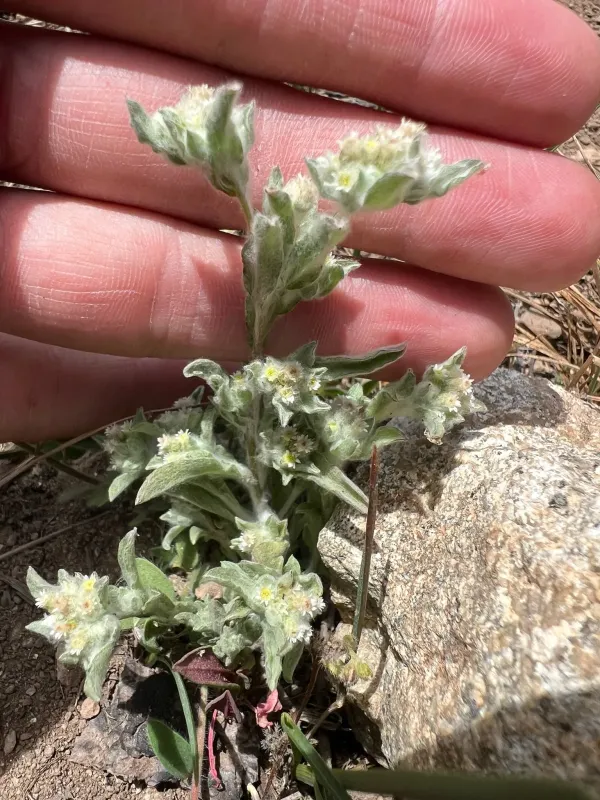
Marsh cudweed (lat. Gnaphalium palustre) is an annual herbaceous plant belonging to the Asteraceae family. It is a small weed, typically growing 5 to 20 cm tall, characterized by a dense, woolly, greyish-white pubescence covering the entire stem and leaves.
The leaves are alternate, linear-lanceolate, and entire, also covered with light-colored hairs. The stem is usually highly branched from the base, giving the plant a compact and bushy appearance.
The flowers are arranged in small heads, which are clustered together at the tops of the stems. These clusters are surrounded by upper leaves, serving as a key diagnostic feature for field identification.
This weed has a well-developed taproot system, allowing it to compete effectively for moisture. Reproduction occurs solely through seeds, which are produced in large quantities and dispersed easily by wind, water, or agricultural machinery.
The growth cycle begins in early spring and continues until late autumn. Due to its high seed production, a single plant can significantly infest an area if soil moisture conditions are favorable for its development.
Where it grows
Marsh cudweed is a typical hydrophyte, preferring damp, wet, and often muddy habitats. It is commonly found along the banks of water bodies, edges of marshes, in wet meadows, and on fields with poor drainage or excess moisture.
In agricultural settings, it is most aggressive in fields with heavy, poorly drained clay soils. It frequently infests row crops, cereals, and permanent pastures located in low-lying areas where water tends to stagnate after rainfall.
The weed successfully colonizes fallow fields if proper tillage and weed control practices are neglected. It is also found along roadsides, ditches, and pathways where soil is compacted and moisture levels remain elevated.
In irrigated agriculture, such as rice or vegetable production, marsh cudweed can form dense populations. Its presence often acts as an indicator of poor soil water management and suggests the need for improved land leveling or drainage systems.
Spread is largely driven by human activity, including the movement of contaminated machinery between fields, the use of contaminated crop seeds, and the natural dispersal of seeds by surface water runoff.
Harm it causes
The primary damage caused by marsh cudweed is intense competition with crops for water and nutrients. Despite its small size, dense mats of this weed can severely suppress the growth of young crop seedlings during critical developmental stages.
The weed rapidly absorbs available moisture from the topsoil, causing water stress for crop plants. This competitive pressure often results in reduced plant density and significantly lower crop yields, especially in regions with limited rainfall.
The presence of marsh cudweed complicates mechanized farming operations. Large amounts of weed biomass during harvest can clog machinery, leading to increased fuel consumption, equipment downtime, and additional post-harvest cleaning requirements.
Marsh cudweed can serve as a host for various pathogens and pests that threaten crop health, complicating phytosanitary management and increasing the need for additional chemical treatments.
Furthermore, seed contamination in harvested grain or vegetable products reduces quality and market value, leading to economic losses and potential rejection of the produce by processors or distributors.
How to control
The foundation of effective control is the improvement of land drainage and surface leveling. Since this weed thrives in wet conditions, eliminating standing water and improving soil structure are crucial for long-term population reduction.
Agronomic control includes timely mechanical soil tillage, such as stubble cultivation and deep fall plowing. These actions bury seeds and disturb the development of young weed seedlings before they establish a strong root system.
Crop rotation is an essential strategy. Including competitive crops that can shade the soil surface helps to limit the development of marsh cudweed. Proper planting density is vital to creating a canopy that inhibits weed growth.
Chemical control involves the application of selective herbicides during the active growth phase of the weed. It is most effective when performed before the weed reaches its flowering stage to prevent seed dispersal.
- Cleaning tillage and harvest machinery before moving to new fields to prevent seed transport.
- Using high-quality, certified crop seeds to avoid weed seed contamination.
- Applying tank mixes of selective herbicides according to manufacturer guidelines.
- Conducting regular field monitoring to identify and treat early infestations.
- Maintaining soil fertility to ensure strong crop growth that outcompetes weeds.
Reference
Connections · Marsh cudweed
Most often together:
Marketplace
Products · 2

Biology
Taxonomy
- Latin name
- Gnaphalium palustre
- Family
- Сложноцветные (астровые)
- EPPO code
- GNAPA