

Weed · affects Winter barley, Tartary buckwheat, Ivy-leaved speedwell
Canadian horseweed
Erigeron canadensis
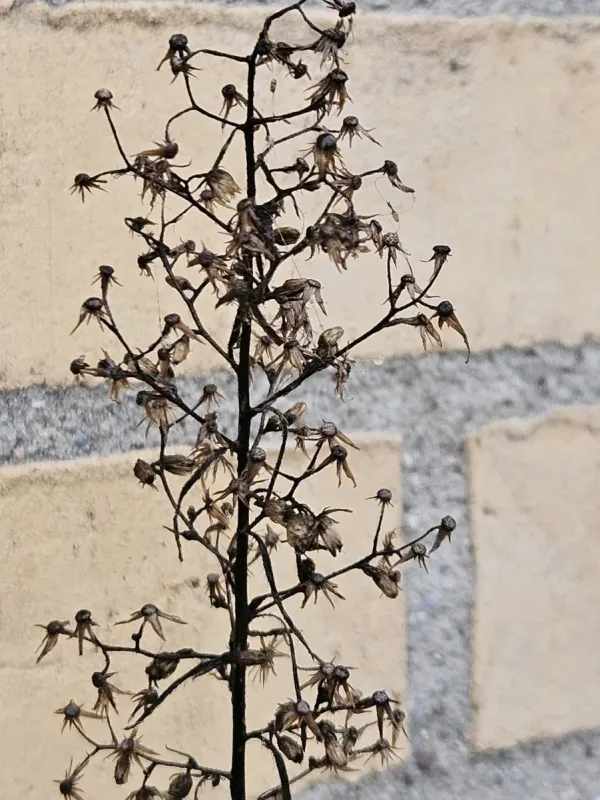
Description
How to tell it apart
Canadian horseweed (Erigeron canadensis), also known as marestail, is a member of the Asteraceae family. It is typically an annual or winter annual weed common in agricultural settings.
The plant features a single, erect, leafy stem that can reach heights of up to 1 meter or more. The stem is often branched near the top and covered with stiff, bristly hairs.
Leaves are linear to lanceolate in shape. Basal leaves form a rosette and may be toothed, while the leaves on the upper stem are narrower and typically sessile.
The inflorescence consists of numerous small flower heads arranged in a dense, elongated panicle. The ray florets are white or pale yellow, while the central disc florets are yellow.
Seeds are small, oblong achenes topped with a pappus of white bristles. This structure allows the seeds to travel long distances via wind, making the weed a prolific disperser.
Where it grows
Canadian horseweed thrives in open, disturbed habitats including fields, roadsides, pastures, waste areas, and recently cleared forest sites.
It is a problematic weed in various crops, including cereals, soybeans, corn, and orchards, where it competes for light, water, and soil nutrients.
The plant shows a high level of adaptability to no-till farming systems, as surface residue protects the seeds and promotes germination in early spring or fall.
Because it is highly fecund, a single mature plant can produce up to 200,000 wind-dispersed seeds, allowing it to colonize entire farms in a very short time.
Its prevalence has increased significantly in many regions due to shifts toward conservation tillage practices where mechanical disturbance is minimized.
Harm it causes
The primary economic harm caused by Canadian horseweed is significant yield loss resulting from direct competition with crops for essential resources.
In dense infestations, the weed creates a thick canopy that shades out young crop plants, hindering their development during critical stages of growth.
It serves as an alternative host for several insects and plant pathogens, increasing the risk of diseases spreading to nearby agricultural crops.
The tall, woody stems of mature horseweed can interfere with harvesting equipment, potentially causing mechanical breakdowns and increasing operational costs.
Seed contamination of harvested grain can lead to price discounts, as the small seeds are difficult to separate from many commercial crop seeds.
How to control
Agronomic control involves aggressive tillage where possible to bury seeds, as Canadian horseweed seeds have limited emergence from deep soil layers.
Crop rotation and the use of cover crops can effectively suppress horseweed by shading the soil surface and reducing the opportunity for weed establishment.
Chemical control is most effective when the weed is in the small rosette stage. Once the plant bolts, control becomes significantly more difficult.
Effective herbicides include systemic products such as 2,4-D, dicamba, and glyphosate. However, growers must monitor for glyphosate-resistant populations in their area.
Integrated weed management (IWM) using pre-emergence herbicides combined with post-emergence treatments provides the best results for sustainable control in fields.
Content graph
Connections · Canadian horseweed
Most often together:
Marketplace
Products · 1
Biology
Taxonomy
- Latin name
- Erigeron canadensis
- Family
- Сложноцветные (астровые)
- EPPO code
- ERICA