
Trichodiadema bulbosum
Trichodiadema bulbosum
Description
How to tell it apart
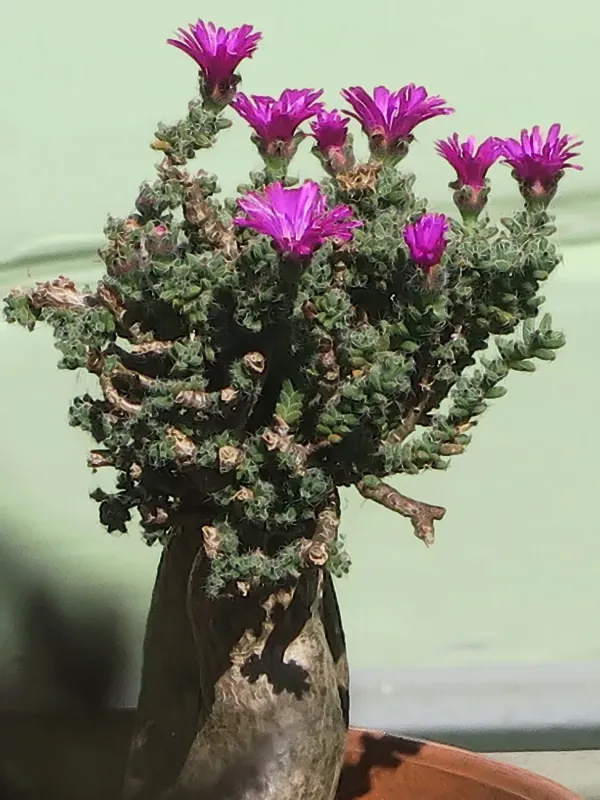
Trichodiadema bulbosum belongs to the Aizoaceae family. It is a perennial succulent plant characterized by a distinct caudex, which is a bulbous, thickened root system that stores essential water.
The aerial part of the plant forms low, cushion-like clusters of small, fleshy leaves. The most recognizable feature is the presence of tiny bristles on leaf tips, resembling a "diadem" or crown.
The flowers are typically pink, purple, or white, blooming primarily during the day. This plant is highly specialized for survival in extreme drought conditions.
Reproduction is both sexual (via seeds) and asexual (via fragmentation of stems). Small stem segments can easily re-root, making it a persistent invader in disturbed soils.
Its root architecture allows for deep anchorage and nutrient storage, ensuring the plant survives long periods of severe moisture stress.
Where it grows
Native to arid regions, specifically parts of South Africa, this species has become an invasive nuisance in similar dry climates worldwide where agriculture is practiced.
It prefers well-drained, sandy, or rocky soils. In agricultural settings, it frequently colonizes irrigated fields, margins, and areas with low crop competition.
The plant often spreads into cultivated areas from fallow lands or roadsides, taking advantage of soil disturbance caused by heavy machinery.
It thrives in environments where other weeds might fail due to lack of water, making it a primary competitor for moisture in semi-arid farming systems.
Its seeds are wind-dispersed, and stem segments are easily transported by water runoff or irrigation systems, facilitating rapid colonisation of new sites.
Harm it causes
The primary damage caused by Trichodiadema bulbosum is its intense competition for water. As a succulent, it efficiently extracts soil moisture, depriving nearby crops.
Its dense growth pattern creates mats that physically obstruct the establishment of crop seedlings, often leading to reduced plant density in affected areas.
On grazing lands, the weed is problematic as it displaces high-quality forage and may contain compounds that are unpalatable or mildly toxic to livestock.
Control is challenging because standard mechanical weeding often fails; if the bulbous root remains in the soil, the plant regenerates very quickly.
It may also serve as a reservoir for specific pests that find shelter within its succulent tissues, allowing these insects to survive during extreme weather.
How to control
Mechanical control requires rigorous effort. To be effective, the entire caudex must be excavated and removed, as simply cutting the foliage promotes regrowth.
Cultural methods include crop rotation with species that produce heavy canopy cover, as the succulent weed requires ample light for optimal development.
Chemical control is complicated by the waxy cuticle of the leaves, which inhibits the absorption of most standard herbicides; surfactants are mandatory.
- Application of systemic herbicides during the peak growth season.
- Strategic tillage to expose and dry out the root systems.
- Regular monitoring of field edges to eradicate small populations before they bloom.
Integrated weed management remains the most reliable strategy, combining physical removal of the roots with targeted chemical treatments to manage the population.
Taxonomy
- Latin name
- Trichodiadema bulbosum
- Family
- Аизовые
- EPPO code
- TIMBU