
Trianthema decandra
Trianthema decandra
Description
How to tell it apart
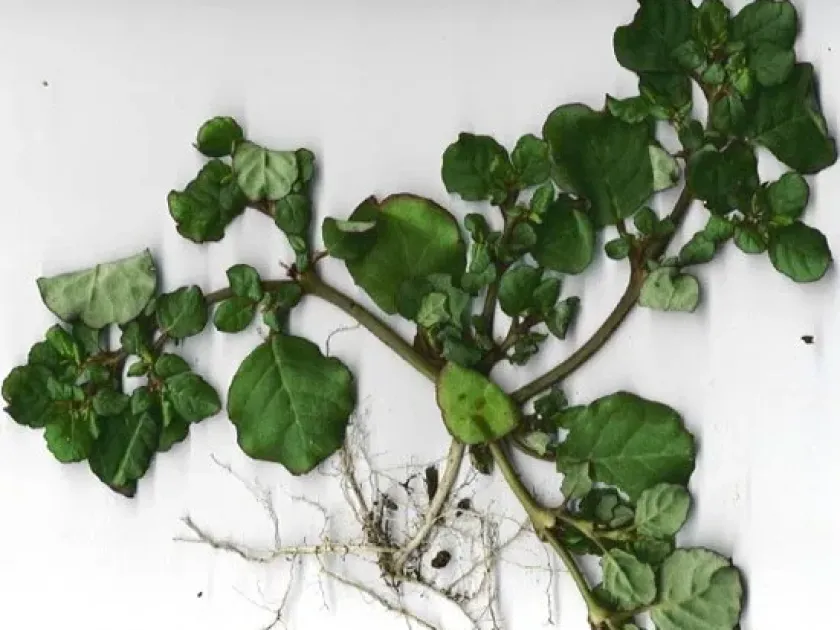
Trianthema decandra is a prostrate annual herb that belongs to the Aizoaceae family. It is characterized by its spreading stems that can create dense mats across the soil surface, effectively smothering surrounding vegetation during the early stages of crop growth.
The leaves are oppositely arranged and feature an obovate shape, which is a key diagnostic feature for field identification. The plant produces small, white to pale-green flowers arranged in axillary clusters, typically possessing ten stamens, which gives the species its specific name.
Its root system is a well-developed taproot, providing the plant with excellent resilience against drought conditions. The stems can take root at the nodes when in contact with moist soil, allowing the plant to propagate vegetatively and cover large areas efficiently.
The seeds are small and exhibit high viability, often remaining dormant in the soil for extended periods. Their ability to persist in the seed bank makes the plant a challenging weed to eradicate permanently from agricultural land.
The plant demonstrates significant biological plasticity, enabling it to thrive in diverse environments and quickly capitalize on available light, moisture, and nutrients in an open field setting.
Where it grows
This weed is native to tropical and subtropical regions, particularly across India, Southeast Asia, and parts of Africa. It has a broad ecological amplitude and can adapt to various soil types, including sandy, loamy, and slightly saline soils.
Trianthema decandra commonly invades agricultural fields, irrigation channels, and roadside areas. It prefers warm, sun-exposed habitats with consistent moisture, making it particularly prevalent in irrigated crop systems during the summer months.
In farming ecosystems, it is frequently found in cultivated lands where the soil structure has been disturbed. It thrives in neglected fields and areas with poor weed management practices, quickly colonizing open spaces between crop rows.
The plant is highly responsive to high temperatures and rainfall, exhibiting rapid biomass production during peak growing seasons. It avoids shade, making it a primary competitor in crops that do not provide quick ground cover.
The spread of this weed is largely driven by human activities, including the movement of contaminated farm machinery and the use of poorly cleaned seeds, facilitating its dispersal into new production zones.
Harm it causes
Trianthema decandra causes significant harm to agricultural yields by competing for resources such as nitrogen, phosphorus, and moisture. Its dense prostrate growth habit deprives young crops of sunlight, which is critical for their development.
The weed acts as a secondary host for various plant viruses and insect pests, increasing the risk of disease outbreaks in primary crops. This interaction forces farmers to implement additional chemical control measures, increasing production costs.
In irrigated fields, the weed can grow rapidly along irrigation furrows, obstructing water flow and potentially leading to uneven water distribution, which negatively impacts crop uniformity and health.
Infestation by this weed lowers overall crop productivity, as the plants remain in a state of resource deficit. This is particularly problematic in legumes and row crops, where early-season competition determines the final harvest outcome.
Harvesting challenges also arise from the presence of Trianthema decandra, as the dense mats of vegetation can clog machinery and increase the moisture content of the harvested crop, potentially affecting quality and storage stability.
How to control
Managing this weed requires an integrated approach that combines mechanical and chemical methods. Deep plowing is highly effective at burying seeds to a depth that prevents germination, while mechanical inter-row cultivation helps remove established plants.
Chemical control involving systemic herbicides is best applied during the active growth phase, preferably before the plant reaches the flowering stage. Selecting an herbicide that targets broad-leaved weeds is essential for effective results.
Cultural practices, such as crop rotation and the use of competitive cover crops, are vital in suppressing Trianthema decandra by denying it the light and space it requires to establish and spread.
Maintaining clean farm perimeters and managing ditch banks are critical, as these areas often serve as primary reservoirs for re-infestation of the fields.
- Regular monitoring of fields for early detection.
- Cleaning equipment thoroughly after use in infested areas.
- Implementing pre-emergent herbicide treatments where applicable.
Taxonomy
- Latin name
- Trianthema decandra
- Family
- Аизовые
- EPPO code
- TRTDE