

Description
How to tell it apart
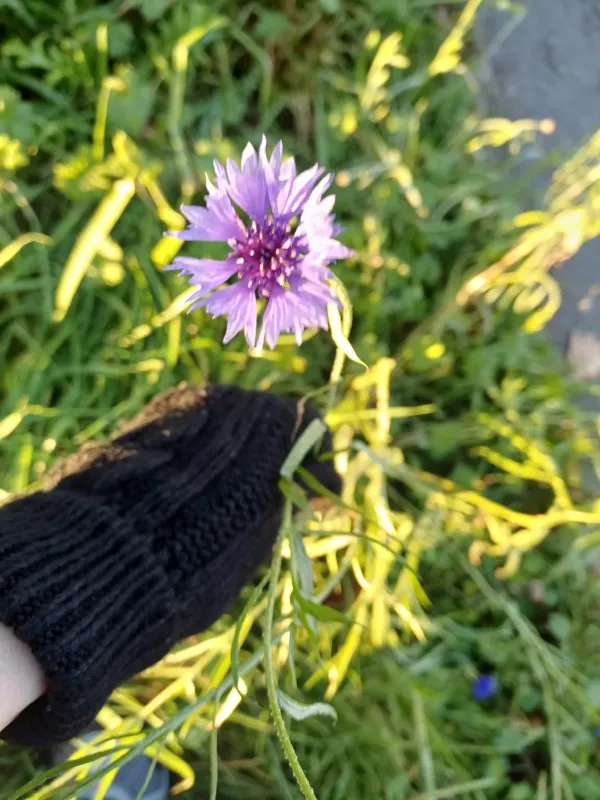
Cornflower (Centaurea cyanus) is an annual or biennial herbaceous weed belonging to the Asteraceae family. It is widely recognized by its vibrant blue, funnel-shaped flowers.
The plant has an erect, branched stem that can reach heights of up to 90 cm. Its leaves are lanceolate and covered with fine, grayish down, which is a characteristic feature.
The root system is a taproot, which allows the plant to efficiently extract nutrients and water even in poor, sandy soil conditions.
The seeds are equipped with a pappus, facilitating wind dispersal. A single plant can produce several thousand seeds, contributing to high reproductive success.
Germination typically occurs in autumn or early spring, allowing the plant to establish itself early and compete effectively with cereal crops.
Where it grows
Cornflower is a classic weed of cereal fields, particularly infesting winter wheat, rye, and barley, where it thrives alongside the crops.
It prefers light, sandy, or loamy soils and is frequently found in areas with low soil fertility, where it can quickly outcompete weakened crops.
Beyond cultivated land, cornflowers are common on roadsides, abandoned fields, and meadows, serving as a constant source of re-infestation for nearby farms.
The plant is light-loving and performs best in open, sunny environments where it is not shaded by dense crop canopies.
Its distribution covers most temperate regions of Europe and North America, where it is classified as a significant agricultural weed.
Harm it causes
The primary harm caused by cornflower is the competition for resources, such as moisture and nitrogen, which directly leads to significant crop yield losses.
By crowding out crops, it reduces light penetration and air circulation, creating a microclimate favorable for fungal diseases and pest development.
The presence of cornflower seeds in grain harvests reduces the market quality and purity of the crop, leading to increased processing and cleaning costs.
In cases of heavy infestation, the weed interferes with harvesting operations, increasing the burden on combines and causing moisture issues in grain storage.
Economic damage is cumulative, as the weed can persist in the soil seed bank for several years if not managed systematically.
How to control
Integrated weed management is crucial, starting with proper crop rotation to break the reproductive cycle and reduce seed bank density in the soil.
Mechanical control techniques include deep autumn plowing and pre-emergence harrowing to disturb the growth of young weed seedlings.
Chemical control involves the use of selective herbicides, preferably applied at the early rosette stage of the weed for maximum efficacy.
Modern herbicides, including sulfonylureas, offer highly efficient control in cereal fields when applied at the recommended dosages.
- Ensure the use of certified, clean crop seeds.
- Manage field margins to prevent the spread of seeds.
- Monitor field conditions regularly to time herbicide applications accurately.
Content graph
Connections · Cornflower
Most often together:
Marketplace
Products · 279
Biology
Taxonomy
- Latin name
- Centaurea
- Family
- Сложноцветные (астровые)
- EPPO code
- CENSS