

Cassius, v.r.p., (Rimsulfuron, 250 g/kg)
ЗАТ Щелково Агрохім , Росія.
Herbicides
0
0
·
26
No offers
—
Details
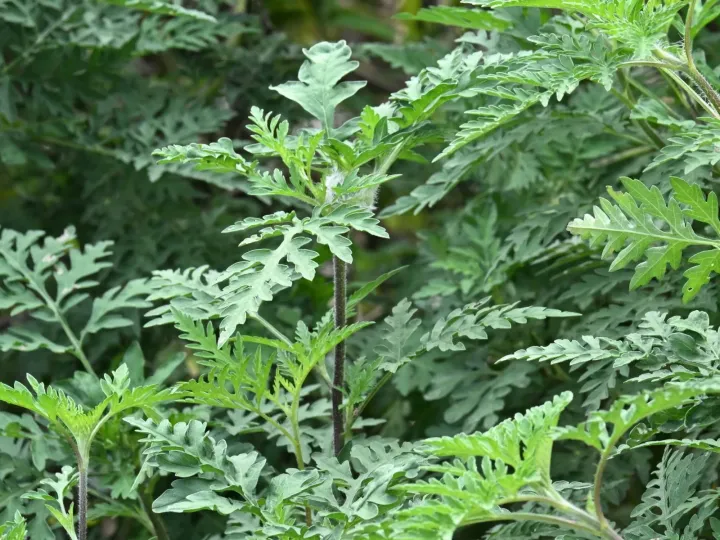
Common ragweed (Ambrosia artemisiifolia) is a member of the Asteraceae family. It is an annual herbaceous plant characterized by a deep taproot and an erect, branched stem that can reach heights of up to two meters.
The leaves are deeply lobed and feathery in appearance, often described as resembling wormwood (Artemisia). They are dark green on the upper surface and lighter, grayish, and hairy on the underside.
The plant produces small, inconspicuous greenish-yellow flowers. It is primarily wind-pollinated, releasing massive amounts of pollen that trigger severe allergic reactions in humans, commonly known as hay fever.
Reproduction occurs entirely through seeds. A single plant can produce tens of thousands of seeds in a growing season, which can remain viable in the soil for several decades.
Seedlings typically emerge in late spring when soil temperatures rise. The plant develops rapidly, quickly establishing itself in disturbed habitats and competing aggressively with local flora.
Ragweed is widely distributed and thrives in disturbed areas such as roadsides, construction sites, and fallow fields. It has high environmental plasticity and colonizes new territories with ease.
In agricultural settings, it is a significant nuisance in row crops like corn, soybeans, and sunflowers. It takes advantage of open spaces and can quickly dominate a field if not controlled.
The plant prefers well-lit, fertile soils, but it is highly resilient and can withstand various environmental stresses, allowing it to persist in a wide range of climates and soil types.
Human activity is the main driver of its spread. Farm machinery, contaminated seeds, and construction vehicles often transport seeds from infested areas to clean fields.
Once established, ragweed creates dense colonies that choke out desirable vegetation, reducing biodiversity and productivity in both managed and wild landscapes.
The primary agricultural harm caused by ragweed is its intense competition for water and soil nutrients. It is highly efficient at absorbing resources, which can severely stress neighboring crops.
Due to its rapid vertical growth, ragweed shades out low-growing crops, limiting their access to sunlight and reducing their overall vigor and yield potential significantly.
Economic losses in infested fields can be substantial, with yield reductions in crops like soybeans reaching 40% or more if the weed is not managed during the critical early growth stages.
The presence of ragweed in pastures reduces forage quality and can negatively affect the health and productivity of livestock, as it is generally unpalatable and potentially toxic if ingested in large quantities.
From a public health perspective, ragweed is one of the most significant sources of aeroallergens. Its pollen spreads over vast distances, causing significant morbidity among susceptible individuals.
Integrated weed management is essential for controlling ragweed. Crop rotation is a primary strategy, as it disrupts the growth cycle of the weed and allows for varied management practices.
Tillage practices are highly effective if performed early in the season to destroy young seedlings. Mechanical cultivation in row crops remains a standard tool for suppressing emerging populations.
Chemical control involves the use of pre-emergence and post-emergence herbicides. Choosing the right product depends on the specific crop and the growth stage of the weed to ensure optimal efficacy.
Success in managing ragweed relies on consistency and early intervention. Because seeds can germinate over an extended period, follow-up treatments are often necessary to prevent late-season seed production.


