
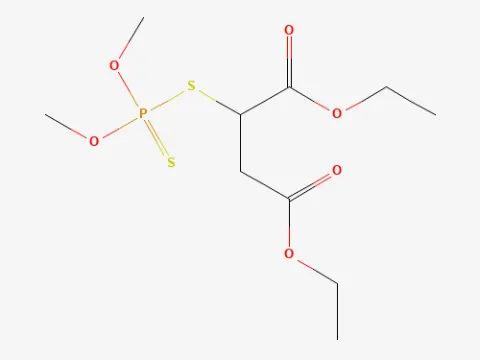
Malathion
Malathion is a well-known organophosphate insecticide that acts as a non-systemic agent with significant contact and stomach toxicity against various pests.
What the section contains
Malathion
The mode of action involves inhibiting the enzyme acetylcholinesterase, which causes an accumulation of acetylcholine in the nervous system of insects, leading to paralysis and death.
As a non-systemic compound, it remains on the surface of plant tissues, providing a fast-acting effect upon contact or ingestion by the pests.
It is valued for its relatively low mammalian toxicity compared to some other organophosphates, although handling precautions remain essential.
Due to its chemical nature, it is effective against a broad spectrum of pests but requires thorough spray coverage to ensure direct contact with the targeted insects.
Malathion is used to manage a wide range of insect populations affecting fruits, vegetables, ornamentals, and agricultural crops.
It is specifically effective against aphids, spider mites, scale insects, thrips, mealybugs, and various beetles.
The substance also plays a role in post-harvest pest control, being used in grain storage facilities to protect stored products from beetles and weevils.
It helps in controlling leaf-chewing caterpillars and other mobile pests that cause significant damage during the active growing phase of plants.
In residential and gardening contexts, it is often utilized to protect garden trees and shrubs from common infestations that threaten foliage and yield.
Application rates vary depending on the specific crop, the intensity of the pest infestation, and the formulation of the product used.
Applications are typically timed to the appearance of the first signs of pests, ensuring that all plant parts are covered effectively during the spray process.
Adherence to the recommended pre-harvest interval (PHI) is critical to ensure that residues on food crops remain within safe levels at the time of consumption.
The frequency of application is strictly regulated to prevent the development of resistance in pest populations and to reduce environmental impact.
Optimal results are usually achieved when treatments are applied at moderate temperatures, avoiding the heat of the day to prevent rapid degradation and potential plant stress.
Personal protective equipment (PPE), including gloves, goggles, and respirators, is mandatory for all personnel handling and applying Malathion.
The substance is highly toxic to bees and beneficial insects, making it essential to avoid spraying during bloom or in areas with high pollinator activity.
Great care must be taken to prevent runoff into aquatic ecosystems, as it is highly toxic to fish and aquatic invertebrates.
Mixing Malathion with alkaline products, such as lime sulfur or Bordeaux mixture, is strictly prohibited due to potential chemical degradation.
Proper storage in a cool, dry, and secure location is necessary to maintain the product's stability and prevent accidental contamination or ingestion.