
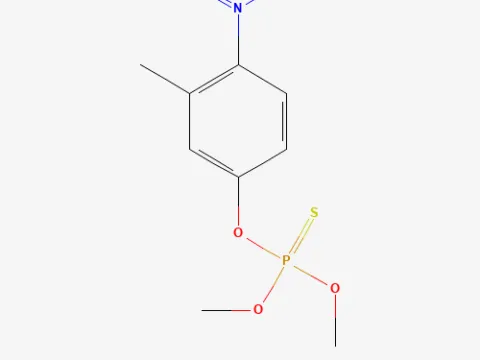
Fenitrothion
Fenitrothion is a broad-spectrum organophosphate insecticide and acaricide known for its contact, stomach, and fumigant actions against various pests.
What the section contains
Fenitrothion
The mode of action involves the inhibition of the enzyme acetylcholinesterase, which is vital for the proper functioning of the insect's nervous system.
By preventing the breakdown of acetylcholine, the chemical leads to continuous nerve impulse transmission, causing paralysis and eventual death of the target pest.
Its fumigant properties make it particularly useful in enclosed spaces, such as grain silos and warehouses, where it effectively controls pests residing in crevices or deep within grain heaps.
The substance is characterized by moderate residual activity, providing a sustained protective barrier for treated crops and storage facilities.
Fenitrothion is widely used to manage a vast array of agricultural and storage pests, particularly those with chewing and sucking mouthparts.
Key target groups include:
- Lepidopteran larvae affecting vegetables and fruit crops.
- Locusts and grasshoppers causing mass destruction of foliage.
- Stored product pests such as weevils, beetles, and moths in warehouses.
- Aphids, scale insects, and leafhoppers on perennial plantations.
- Various mites that threaten the vigor of crops and yield quality.
Due to its high efficacy, it is often employed as a rapid response tool during severe pest outbreaks that threaten overall crop viability.
It remains effective against both juvenile and adult forms of many insect species, ensuring a comprehensive reduction in pest pressure.
Agricultural professionals rely on this substance to protect both the physical integrity and the post-harvest quality of grains and produce.
Application rates for fenitrothion depend on the specific pest, crop type, and the density of the infestation, always following the manufacturer's provided labels.
In field applications, common rates range from 0.5 to 2.0 kilograms of active ingredient per hectare, depending on the formulation and application method.
For grain storage treatments, precise dosing per tonne of commodity is critical to ensure even distribution and effective fumigation without exceeding safety limits.
The timing of the application should align with the insect's life cycle, focusing on periods when they are most vulnerable to chemical exposure.
Adhering to the strictly defined pre-harvest intervals is essential to ensure that treated crops are safe for human or animal consumption at the time of market release.
Fenitrothion is highly toxic to pollinators, particularly bees, and must not be applied during the blooming period of crops to prevent catastrophic losses to local hive populations.
Personnel handling the chemical must strictly follow safety protocols, using protective clothing, gloves, and respirators to prevent inhalation or dermal absorption.
Environmental precautions are vital; runoff into streams, rivers, or lakes must be prevented, as the chemical is hazardous to aquatic organisms.
Continuous or excessive use of fenitrothion can lead to the development of resistant pest strains; therefore, rotation with insecticides of different chemical classes is strongly advised.
Compliance with local and international regulations regarding maximum residue limits (MRLs) is mandatory for any commercial agricultural operation.