
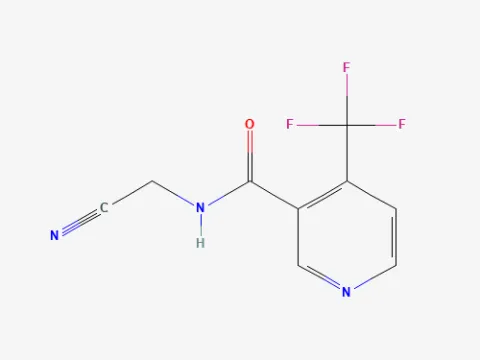
Flonicamid
Flonicamid belongs to the pyridinecarboxamide chemical class and acts as a highly selective systemic insecticide. Its key feature lies in a unique mode of action that targets the nervous system of pests.
What the section contains
Flonicamid
Upon entering the insect's body, the substance causes an immediate cessation of feeding. The pest does not die instantly, but stops causing damage to the plant, which prevents the transmission of viral diseases.
Flonicamid blocks the functioning of chordotonal organs in insects, which are responsible for movement coordination and signal transmission. As a result of these functional disruptions, the pest loses its ability to coordinate movements and soon dies from starvation and dehydration.
The product is characterized by a strong systemic effect. The substance rapidly penetrates plant tissues and translocates throughout the entire organism, including new growth, providing protection to untreated parts.
The product exhibits translaminar activity, allowing it to penetrate through the leaf blade. This is critical for controlling hidden pests residing on the underside of leaves.
Flonicamid is intended for controlling a wide spectrum of sucking pests from the order Hemiptera. It demonstrates high efficacy against all types of aphids, including populations resistant to organophosphates and neonicotinoids.
In addition to aphids, the product actively suppresses the development of greenhouse whiteflies and various species of scale insects. It is also used against thrips and certain species of leafhoppers at various developmental stages.
Due to its high selectivity, flonicamid has virtually no negative impact on beneficial insects, including entomophages and pollinators. This makes it a valuable tool in integrated pest management (IPM) programs.
- Aphids (various species)
- Greenhouse whitefly
- Thrips
- Scale insects
- Leafhoppers
The product's efficacy has been confirmed on field crops, greenhouse vegetables, fruit trees, and ornamental plants. It reliably protects crops even under conditions of high pest pressure.
Application rates for flonicamid depend on the crop type and the severity of pest infestation. Usually, water-dispersible granules are used, which dissolve easily in water.
The optimal time for application is during the period of active colonization by pests. It is recommended to start spraying at the appearance of the first individuals to prevent rapid aphid colony expansion.
The frequency of applications is regulated by specific product labels, usually ranging from 1 to 2 times per season. This helps avoid resistance development, although flonicamid itself is a powerful tool against resistant strains.
The spray volume should be sufficient to ensure uniform coverage of the entire leaf surface. It is important to avoid runoff to ensure maximum concentration of the active substance remains on the plant.
Weather conditions should be considered before application: the product is quickly absorbed by tissues, but high humidity and moderate temperatures promote better distribution of the active substance within the plant.
Standard safety measures must be followed when working with flonicamid. Despite low toxicity to bees, it is not recommended to apply during peak flowering times when pollinator activity is high.
Personal protective equipment must be used: gloves, goggles, and protective clothing. Avoid contact of the concentrate with skin and mucous membranes; in case of contact, immediately rinse the affected area with plenty of water.
The product should be stored in its original packaging in a dry, cool place, away from children and animals. Expiry dates and storage conditions are determined by the manufacturer of each specific product.
Before preparing tank mixtures, it is recommended to perform a physical compatibility test. Flonicamid is compatible with many pesticides, but mixtures with strongly alkaline products should be avoided.
Always observe the pre-harvest intervals (PHI) specified on the product label. This ensures that no residual amounts of the active substance remain in the produce intended for human consumption.