

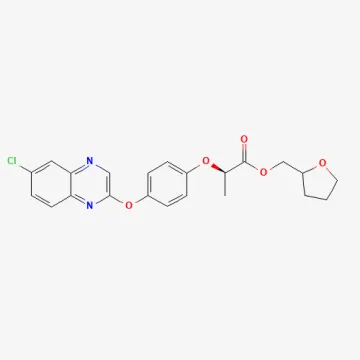
Description
Mode of action
Quizalofop-P-tefuryl is a systemic herbicide belonging to the aryloxyphenoxypropionate chemical class. It is highly selective and specialized for controlling grass weeds in broad-leaved crops.
The mechanism of action involves the inhibition of the acetyl-CoA carboxylase enzyme, which is essential for fatty acid synthesis in plant tissues. This disruption prevents the formation of new cell membranes.
Once applied, the substance is rapidly absorbed by the leaf surface and translocated throughout the plant to the growing points, including rhizomes and roots.
Growth of susceptible weeds ceases within hours of treatment. Visible symptoms such as chlorosis, necrosis, and tissue breakdown appear within 7 to 10 days post-application.
The systemic nature of the product ensures complete elimination of perennial grasses, as it effectively penetrates deep into root systems, preventing regrowth.
What it targets
This compound acts as a powerful graminicide, targeting a wide range of annual and perennial grass species that compete with crops for nutrients and moisture.
Primary targets include species such as couch grass, barnyard grass, foxtail, wild oats, and Johnsongrass. These weeds are effectively managed without harming the host broad-leaved crop.
The herbicide has no effect on broad-leaved weeds, making it highly specific for its intended use in crops like soybeans, sunflowers, and sugar beets.
It provides significant flexibility in integrated weed management strategies by allowing targeted control of grass infestations without impacting non-target plant species.
- Elymus repens (Couch grass)
- Echinochloa crus-galli (Barnyard grass)
- Setaria spp. (Foxtail)
- Avena fatua (Wild oats)
- Sorghum halepense (Johnsongrass)
Rates and timing
Application rates depend on the specific weed species and their growth stage. Perennial weeds generally require higher doses compared to annual grasses.
The best control is achieved when weeds are in the active growth phase. Annual grasses are most susceptible at the 2 to 4 leaf stage, while perennial grasses should be treated at a height of 10–15 cm.
Applications should be made under favorable conditions, ideally at temperatures between 15°C and 25°C, ensuring uniform spray coverage for maximum absorption.
Water volume should be sufficient to moisten the leaves thoroughly without runoff. Using proper nozzle technology enhances droplet distribution and overall effectiveness.
When tank-mixing with other pesticides, a jar test is recommended to ensure chemical compatibility and to avoid the potential loss of active ingredient efficacy.
Restrictions
This herbicide must never be applied to cereal crops, as grasses are inherently sensitive to this chemistry, and treatment would result in severe crop damage or death.
Avoid applying the herbicide when the crop is under environmental stress, such as drought, extreme temperatures, or severe pest pressure, as this can increase the risk of phytotoxicity.
Strict adherence to safety protocols is mandatory. Operators must wear personal protective equipment to prevent exposure through skin contact or inhalation.
Rainfall shortly after application (within one hour) can reduce effectiveness by washing the active ingredient from the foliage before it is fully absorbed.
Always follow the product label instructions carefully, including required spray equipment cleaning procedures, to prevent cross-contamination in subsequent operations.
Regulatory
Status in the European Union
Approved in the EU
- Category (EU)
- HB - Herbicide
- Approved from
- 01.12.2009
- Approval until
- 28.02.2027
- ADI
- 0.013 mg/kg bw/day
- ARfD
- 0.1 mg/kg bw
- AOEL
- 0.01 mg/kg bw/day
Hazard classification (CLP)
Acute Tox. 4 - H302Aquatic Acute 1 - H400Aquatic Chronic 1 - H410Carc. 2 - H351Repr. 2 - H361fdSTOT RE 2 - H373
EU legislation
EU status is for reference only and does not replace national registration in your country.
Content graph
Connections · Quizalofop-P-tefuryl
Most often together:
Marketplace
Products · 4

Pantera
Кемарк КФТ, Угорщи (на замовлення Кемтура Корпорейшн, США)на
Herbicides
1
0
·
3.4K
27 offers
9 €per 1 l
Buy

