

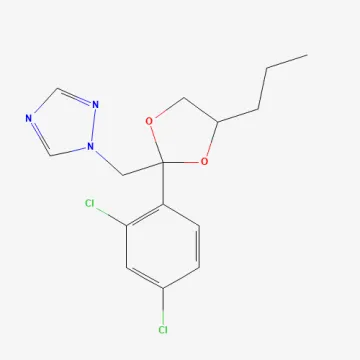
Description
Mode of action
Propiconazole is a powerful systemic fungicide belonging to the triazole chemical class. It is widely used in global agriculture for its significant preventive, curative, and eradicative properties against various fungal pathogens.
The primary mode of action is the inhibition of ergosterol biosynthesis, a vital component of fungal cell membranes. By disrupting the production of this substance, propiconazole causes irreversible damage to the cell structure, leading to growth inhibition and death of the fungus.
Once applied, the substance is rapidly absorbed by the plant foliage and moves systemically via the xylem. This provides uniform protection throughout the plant, including new growth that develops after the application.
Propiconazole exhibits excellent rainfastness, which is crucial for maintaining efficacy in variable weather conditions. It binds effectively to leaf tissues, ensuring long-lasting protective activity against persistent fungal threats.
Beyond its protective role, propiconazole actively suppresses the sporulation of many fungal species. This helps significantly lower the overall inoculum level in the field, preventing the rapid spread of diseases across the canopy.
What it targets
Propiconazole is extensively used on cereal crops, including wheat, barley, rye, and oats. It is also highly effective in protecting sugar beets, corn, oilseed rape, and various fruit-bearing plants from fungal infections.
The fungicide is effective against a broad spectrum of diseases, primarily focusing on foliar and spike pathogens. It provides excellent control over various types of rust, powdery mildew, and leaf spot complexes.
Key diseases controlled by propiconazole include:
- Septoria leaf and glume blotch
- Yellow and brown rusts
- Net blotch of barley
- Tan spot
- Cercospora leaf spot
By effectively controlling these pathogens, propiconazole helps preserve the photosynthetic area of the leaves, which is essential for maximizing grain fill and final crop yield.
The product is also beneficial in reducing the incidence of Fusarium head blight, thereby helping to maintain grain quality and reducing the accumulation of harmful mycotoxins in the harvest.
Rates and timing
Application rates for propiconazole are generally between 0.3 to 0.5 liters of active ingredient per hectare, depending on the crop growth stage and the severity of the disease pressure observed in the field.
The optimal timing for application is during the stem elongation phase up to the early flowering stages. Protecting the flag leaf is particularly critical for maintaining high photosynthetic efficiency during the grain-filling period.
Under conditions of high disease pressure, utilizing the higher labeled rates is recommended to ensure immediate suppression of the infection. In preventive scenarios, lower rates can be applied to maintain healthy crop conditions.
To ensure long-term efficacy, it is recommended to limit the number of applications to a maximum of two per season. This strategy is vital for preventing the development of resistant fungal strains within the local population.
The application should be performed using well-calibrated sprayers to ensure thorough and uniform coverage of the crop canopy. Proper water volume is essential to guarantee that the fungicide reaches all parts of the foliage.
Restrictions
Standard personal protective equipment, including gloves, goggles, and respiratory masks, must be worn when handling or applying propiconazole to avoid skin contact and inhalation of the spray mist.
Applications should not be performed during strong winds to prevent drift onto adjacent areas. Extra caution must be taken when working near water bodies, as the substance can be toxic to aquatic life.
High temperatures during the application period can decrease the efficiency of the treatment. It is recommended to perform spraying during the cooler parts of the day, such as early morning or late evening.
To avoid resistance build-up, it is best practice to rotate propiconazole with fungicides from different chemical classes, such as strobilurins or carboxamides, in a structured integrated pest management (IPM) program.
Always adhere to the pre-harvest interval (PHI) specified on the product label. This ensures that the crop is safe for consumption and meets all international food safety standards at the time of harvest.
Regulatory
Status in the European Union
Not approved in the EU
- CAS number
- 60207-90-1
- Category (EU)
- FU - Fungicide
- Approved from
- 01.06.2004
- Approval until
- 19.12.2018
- ADI
- 0.04 mg/kg bw/day
- ARfD
- 0.1 mg/kg bw
- AOEL
- 0.1 mg/kg bw/day
Hazard classification (CLP)
Acute Tox. 4 - H302Aquatic Acute 1 - H400Aquatic Chronic 1 - H410Repr. 1B - H360DSkin Sens. 1 - H317
EU legislation
EU status is for reference only and does not replace national registration in your country.
Content graph
Connections · Propiconazole
Most often together:
Marketplace
Products · 124

Kolosal Pro
ЗАТ Фірма Август, Росія.,селище Вурнари,
Fungicides
1
1
·
5.2K
7 offers
5.56 €per 1 l
Buy


Arbalet
Хімічні заводи «Органіка-Сажина»С.А., Нова Сажина, Польща
Fungicides
0
0
·
1.4K
2 offers
15.72 €per 1 l
Buy


Protect - Fungus
Innovative company "Agro Protection", LLC
Fungicides
0
0
·
70
20 offers
38.99 €per 1 l
Buy


Dot
Шанхай Агрочайна Інтернешнел Трейд Ко., Лтд., Шанхай, Китай.
Fungicides
0
0
·
57
1 offer
12.28 €per 1 l
Buy


Stayer 500 KE
Фадер Альянс Лтд., Великобританія (Fader Alliance Ltd., England) на заводах Нідерландів, Польщі
Fungicides
0
0
·
52
2 offers
22.76 €per 1 l
Buy


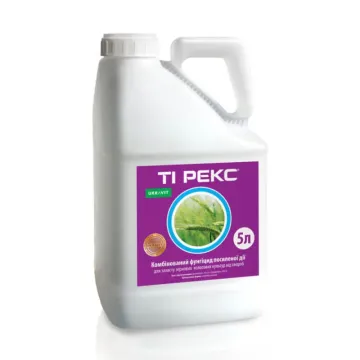
TI REX, KE
ТОВ «Фабрика агрохімікатів», Черкаси, Україна
Fungicides
0
0
·
51
2 offers
13.75 €per 1 l
Buy


Maxon
Jiangsu Sevencontinent Green Chemical Co. Ltd, Jiangsu, КНР
Fungicides
0
0
·
48
5 offers
2.56 €per 1 l
Buy

Dow, c.c.r., Fungicide (Propiconazole, 200 g/l + Tebuconazole, 200 g/l)
ЗАТ Щелково Агрохім , Росія.
Fungicides
0
0
·
48
1 offer
21.94 €per 1 l
Buy


