

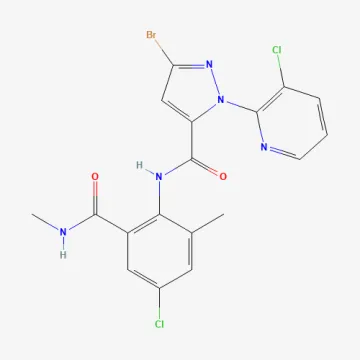
Description
Mode of action
Chlorantraniliprole is a cutting-edge active ingredient belonging to the anthranilic diamide class. It works through a unique mode of action that targets ryanodine receptors within the muscles of the insect.
Once ingested or absorbed through contact, the substance triggers the release of internal calcium stores in the insect's muscles. This leads to an immediate cessation of feeding, followed by paralysis and eventual death within 1 to 3 days.
The compound exhibits exceptional translaminar activity, which allows it to penetrate leaf tissues and provide systemic-like protection. This is highly effective against larvae that feed inside leaves or stems, protecting the plant from within.
Chlorantraniliprole is highly resistant to wash-off by rain once the spray has dried. Its stability under varying temperature conditions and intense sunlight ensures long-lasting efficacy, typically providing protection for 3 to 4 weeks.
A major benefit of this substance is its high selectivity. It is largely safe for beneficial insects, pollinators, and natural predators, making it an ideal choice for Integrated Pest Management (IPM) programs worldwide.
What it targets
Chlorantraniliprole is primarily used to control pests from the order Lepidoptera, including many stubborn moths and caterpillars. It is highly effective across various stages of pest development, from eggs to mature larvae.
- Codling moth
- Grape berry moth
- Cotton bollworm
- European corn borer
- Various species of leafminers
The broad spectrum of control includes species that are often resistant to older classes of insecticides, such as pyrethroids or organophosphates. This makes it an essential tool for maintaining high yields in high-value crops.
Effective control is crucial for protecting fruits, vegetables, and field crops from severe aesthetic and yield damage. By stopping feeding immediately upon exposure, the insecticide prevents the most critical phases of crop destruction.
The product's ability to target larvae at various growth stages allows for more flexibility in timing applications. This reliability helps farmers manage pest populations even during heavy outbreaks or uneven emergence patterns.
Rates and timing
Chlorantraniliprole is applied at very low rates per hectare, which significantly reduces the overall chemical load on the environment. Exact application rates depend on the crop type, pest pressure, and local regulations.
Applications should be timed based on field monitoring, including the use of pheromone traps or visual inspections of eggs and young larvae. Preventive or early-stage applications consistently yield the best results for crop protection.
Uniform coverage of the crop is essential for success. Using modern spraying equipment ensures that the translaminar properties of the active ingredient are utilized, providing consistent protection across all parts of the plant canopy.
In orchards and vineyards, spray volume should be sufficient to reach the inner canopy and areas where larvae hide. Proper calibration of equipment is necessary to avoid wastage and ensure effective concentration of the active ingredient.
To ensure long-term sustainability, users should strictly follow the recommended number of applications per season. Avoiding excessive use helps preserve the effectiveness of the insecticide for future seasons and prevents resistance buildup.
Restrictions
Safety during handling and application is paramount. Operators must use appropriate Personal Protective Equipment (PPE), including gloves, long-sleeved clothing, and eye protection, to prevent accidental contact with the concentrate.
Measures should be taken to prevent spray drift into non-target areas or sensitive aquatic environments. Although the substance has low toxicity to most vertebrates, it is important to observe buffer zones near water bodies.
Resistance management is critical for the long-term viability of Chlorantraniliprole. It should be rotated with insecticides that possess a different mode of action to ensure that pest populations do not develop immunity over time.
Although it is relatively safe for bees, applications should be avoided during peak foraging times as a precautionary measure. Responsible farming practices include informing local beekeepers and timing applications to minimize environmental impact.
Always adhere to the Pre-Harvest Interval (PHI) specified on the product label. This ensures that the final agricultural produce is safe for the consumer and complies with international maximum residue limits (MRLs).
Regulatory
Status in the European Union
Approved in the EU
- CAS number
- 500008-45-7
- Approved from
- 01.05.2014
- Approval until
- 31.05.2027
- ADI
- 1.56 mg/kg bw/day
- ARfD
- Not appl.
- AOEL
- 0.36 mg/kg bw/day
EU legislation
EU status is for reference only and does not replace national registration in your country.
Content graph
Connections · Chlorantraniliprole
Most often together:
Marketplace