

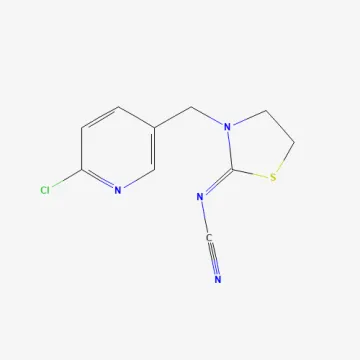
Description
Mode of action
Thiacloprid is a potent systemic insecticide belonging to the neonicotinoid class. It functions by disrupting the normal transmission of nerve impulses in insects, acting as an agonist on the nicotinic acetylcholine receptors in the central nervous system, leading to paralysis and death.
The core advantage of thiacloprid is its high systemic mobility within the plant, allowing it to move through the vascular system to newly emerged leaves and shoots. This provides long-lasting protection of the entire plant canopy after the initial application.
It exhibits both contact and stomach activity, making it highly effective against a wide range of sucking and chewing insects. Insects are eliminated either through direct contact with the spray or through ingestion of treated plant tissues.
Thiacloprid is particularly effective against populations that have developed resistance to traditional organophosphate or pyrethroid insecticides. Its unique chemical structure makes it a valuable tool in modern integrated pest management strategies.
The substance remains stable across a wide range of temperatures and is relatively resistant to wash-off by rain once the spray has dried. This reliability ensures consistent performance even in challenging field conditions throughout the growing season.
What it targets
This active ingredient targets a broad spectrum of pests, including Coleoptera (beetles), Lepidoptera (moths and butterflies), and Homoptera (aphids and whiteflies). It is widely used to control pests like the Colorado potato beetle and various orchard weevils.
Thiacloprid is applied to a variety of crops, including fruit trees, cereals, vegetables, and oilseed rape. Its use helps prevent significant damage to both foliage and fruit, ensuring optimal yield quantity and quality for market requirements.
Systemic action allows the product to control hidden pests that reside within dense foliage or inside stems, where contact-only insecticides often fail. This capability is essential for managing pests that are otherwise difficult to reach.
By effectively suppressing early-season pest infestations, thiacloprid helps maintain plant vigor and protects the reproductive organs of the crops. This early-stage protection is a key factor in achieving successful harvests and preventing economic damage.
Its effectiveness against various developmental stages of insects makes it a versatile solution for different agricultural scenarios. Regular monitoring and targeted application ensure that pest populations are kept below economic injury levels.
Rates and timing
Application rates for thiacloprid are determined by the specific crop, the level of infestation, and the chemical formulation. Typically, rates range from 0.1 to 0.4 kg/ha of the active ingredient, depending on the regulatory requirements for the specific country.
The timing of application is critical and should be aligned with the pest's life cycle and the threshold levels of damage. Treatments are ideally performed during early morning or late evening hours to maximize efficacy and avoid rapid drying under high sun.
Strict adherence to pre-harvest intervals (PHI) is mandatory to ensure food safety. These intervals, usually ranging from 20 to 30 days, allow for the natural degradation of the active ingredient, ensuring residues remain within safe limits for consumers.
Proper preparation of the spray mixture is essential for success. Using clean water and ensuring thorough agitation in the sprayer tank prevents nozzle clogging and guarantees an even distribution of the active ingredient across the entire treatment area.
When mixing with other agrochemicals, a compatibility test is recommended to ensure stability. Avoid mixing thiacloprid with highly alkaline substances, as this can degrade the active compound and reduce the overall efficacy of the treatment.
Restrictions
Thiacloprid is highly toxic to bees and other essential pollinators. Application during the flowering period is strictly prohibited to prevent massive losses to honeybee colonies and to maintain ecological balance in the surrounding area.
Operators must adhere to established buffer zones near water bodies and apiaries to prevent spray drift and contamination. Informing local beekeepers in advance of any planned applications is a standard and necessary practice in responsible agriculture.
Environmental protection measures are crucial. Preventing the runoff of spray solution into surface water and drainage systems is mandatory to protect aquatic life. Equipment cleaning should only occur in designated areas away from sensitive ecosystems.
Personal Protective Equipment (PPE) is mandatory for all personnel handling the product. This includes chemical-resistant clothing, gloves, safety goggles, and respiratory protection to minimize exposure through skin contact or inhalation during mixing and application.
All empty containers and leftover solutions must be disposed of in accordance with regional environmental regulations. Responsible management of waste and strict compliance with safety guidelines are essential for safe and sustainable agricultural operations.
Content graph
Connections · Thiacloprid
Most often together:
Marketplace
Products · 42


Protect DUO
Innovative company "Agro Protection", LLC
Insecticides
0
0
·
56
1 offer
56.83 €per 1 l
Buy


COLIBRIS
ТОВ «Фабрика агрохімікатів», Черкаси, Україна
Insecticides
0
0
·
36
8 offers
11.09 €per 1 l
Buy


