

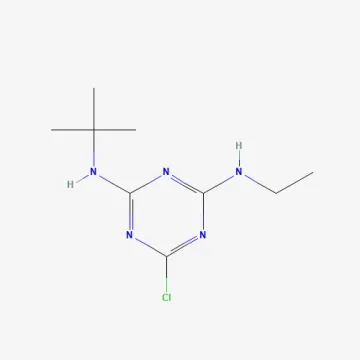
Description
Mode of action
Terbuthylazine belongs to the triazine chemical class. It is a systemic herbicide that is absorbed by the root system of weeds from the soil, and partially through leaves when applied post-emergence.
The active substance blocks the process of photosynthesis in weed cells. It inhibits electron transport in photosystem II, which leads to a disruption of the energy metabolism within the plant.
The cessation of photosynthesis causes growth and development to stop just hours after the substance is absorbed. Total plant death follows due to metabolic failure within the leaves.
The substance is characterized by high selectivity towards crop plants, such as corn, which are able to metabolize the herbicide and neutralize its effect before it causes any damage.
In the soil, terbuthylazine exhibits long residual activity, creating a protective barrier that prevents new flushes of weeds from germinating over an extended period.
What it targets
The herbicide effectively controls a wide spectrum of annual broadleaf weeds. Sensitive species include amaranthus, chenopodium, polygonum, solanum nigrum, chamomile species, and many others.
The effect of the preparation is less pronounced against perennial root-sucker weeds, so in such cases, it is recommended to use tank mixes with herbicides of different modes of action.
It is used for protecting corn, sorghum, and sunflowers (depending on registration regulations) from competitive pressure during critical growth phases.
The product shows high efficiency during the early stages of weed development when their root system has not yet penetrated deeply into the soil horizon.
An important advantage is the control of weed species resistant to other groups of herbicides, making terbuthylazine a valuable tool in anti-resistance management systems.
Rates and timing
Application rates vary depending on the soil type and its organic matter content. Heavy soils with higher humus levels require higher dosage rates.
The product is applied both pre-sowing and post-emergence of the crop, but before weeds reach the two-to-four true leaf stage to achieve the maximum effect.
When used in tank mixes, for example with glyphosate or mesotrione, the dosage of terbuthylazine can be adjusted to broaden the spectrum of action.
Application timing is strictly limited by the crop development phase to avoid the possibility of phytotoxic effects on young plants during periods of stressful weather conditions.
- Application on moist soil increases the efficiency of root absorption
- The optimal temperature for treatment ranges from +10 to +25 degrees Celsius
Restrictions
Terbuthylazine has moderate persistence in the soil. When planning crop rotation, it is necessary to consider potential restrictions for subsequent sensitive crops.
It is not recommended to apply the product on very light (sandy) soils with low humus content due to the risk of leaching into deeper horizons during heavy rainfall.
During application, it is necessary to avoid spray drift onto neighboring crops sensitive to triazine herbicides by using modern sprayer nozzles.
Safety precautions include the use of personal protective equipment for skin and respiratory protection, as well as maintaining sanitary buffer zones around water bodies and residential buildings.
Storage of the preparation should be carried out in closed warehouses, avoiding exposure to sunlight and temperature fluctuations that may negatively affect the stability of the active ingredients.
Regulatory
Status in the European Union
Approved in the EU
- CAS number
- 5915-41-3
- Category (EU)
- HB - Herbicide
- Approved from
- 01.01.2012
- Approval until
- 31.05.2027
- ADI
- 0.004 mg/kg bw/day
- ARfD
- 0.008 mg/kg bw
- AOEL
- 0.0032 mg/kg bw/day
Hazard classification (CLP)
Acute Tox. 4 - H302Aquatic Acute 1 - H400Aquatic Chronic 1 - H410STOT RE 2 - H373
EU status is for reference only and does not replace national registration in your country.
Content graph
Connections · Terbuthylazine
Most often together:
Marketplace
Products · 109


Terlan, KS (terbuthylazine, 500 g/l)
Hangzhou Ruijiang Chemical Co., Ltd, КНР
Herbicides
0
0
·
37
1 offer
275.24 €per 1 l
Buy


Varyag
ТОВ «Фабрика агрохімікатів», Черкаси, Україна
Herbicides
0
0
·
36
17 offers
5.49 €per 1 l
Buy

VARYAG, KS (metolachlor, 315 g/l + terbuthylazine, 190 g/l)
ТОВ «Фабрика агрохімікатів», Черкаси, Україна
Herbicides
0
0
·
36
1 offer
158.8 €per pack
Buy


Chaser-P, s.e.
F.A.GAN Chemical Manufacturers Ltd. Israel, member
Herbicides
0
0
·
33
1 offer
11.37 €per 1 l
Buy

VARAG TRIO, SE
ТОВ «Фабрика агрохімікатів», Черкаси, Україна
Herbicides
0
0
·
33
12 offers
0.29 €per 1 l
Buy

Aidaho, CS (terbuthylazine, 500 g/L)
Hangzhou Ruijiang Chemical Co., Ltd.
Herbicides
0
0
·
32
3 offers
5.03 €per 1 l
Buy


MTM-Old
ТОВ «Фабрика агрохімікатів», Черкаси, Україна
Herbicides
0
0
·
28
5 offers
34.4 €per 1 l
Buy

Zeagran 350, SE
Нуфарм Австралія Лтд. , Австралія (місце виробництва: Чілі
Herbicides
0
0
·
28
3 offers
0.17 €per pack
Buy

Idaho, KS (terbuthylazine, 500 g
Hangzhou Ruijiang Chemical Co., Ltd.
Herbicides
0
0
·
25
4 offers
5.03 €per 1 l
Buy


Zeagran 340, SE
Нуфарм Австралія Лтд. , Австралія (місце виробництва: Чілі
Herbicides
0
0
·
58
No offers
—
Details


Ekstrazin SC, KC
Zhejiang Zhongshan Chemical Industry Group Co., Ltd.
Herbicides
0
0
·
51
No offers
—
Details


Extra-Corn, SE, herbicide
ТОВ «Франдеса» , Республіка Білорусь
Herbicides
0
0
·
51
No offers
—
Details


DoubleFight 500 CS
Фадер Альянс Лтд., Великобританія (Fader Alliance Ltd., England) на заводах Нідерландів, Польщі
Herbicides
0
0
·
43
No offers
—
Details


