

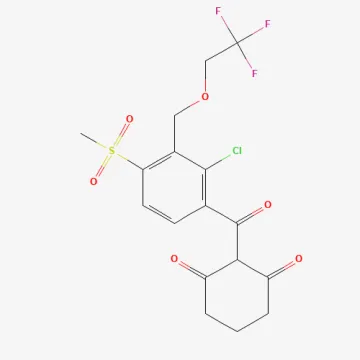
Description
Mode of action
Tembotrione belongs to the chemical class of triketones. It is a systemic herbicide rapidly absorbed by leaves and partially by the root system of weeds.
The primary mode of action involves inhibiting the enzyme 4-hydroxyphenylpyruvate dioxygenase (4-HPPD) within plant cells.
The inhibition of this enzyme leads to the cessation of carotenoid synthesis, which subsequently destroys chlorophyll in young tissues.
As a result of blocked photosynthesis, weeds lose their color, bleach (chlorosis), and perish completely within 10 to 14 days.
The product exhibits high selectivity due to the maize plant's ability to rapidly metabolize the active ingredient into non-toxic compounds.
What it targets
Tembotrione demonstrates exceptional efficacy against a broad spectrum of annual broadleaf weeds and certain grass species.
Specifically, it effectively controls the most difficult-to-eradicate species, such as common lambsquarters, pigweed, and common ragweed.
The herbicide shows excellent results in controlling smartweed species, black nightshade, and various members of the cruciferous family.
It also provides significant suppression or elimination of millet-like weeds that compete with maize during early growth stages.
The active substance maintains a high level of performance on over-grown weeds, providing flexibility when treatment timing is delayed.
Rates and timing
Typically, tembotrione-based herbicides are applied during the active growth period of weeds, from the 2 to 8 leaf stage of maize.
Optimal efficacy is achieved when targeting weeds in the 2-4 leaf stage, before they begin to suppress the crop development.
Application rates are strictly regulated and depend on the specific weed species composition, their developmental stage, and regional weather conditions.
A crucial requirement is the use of high-quality adjuvants, which improve the penetration of the herbicide through the weed leaf cuticle.
The spray solution must uniformly cover the leaf surface of the target weeds to achieve the fastest possible herbicidal effect.
Restrictions
It is not recommended to apply tembotrione if the crop is under stress due to drought, excess moisture, or low temperatures.
The use of the product in tank mixes with organophosphate insecticides should be avoided, as this may cause phytotoxicity in maize.
It is important to adhere to temperature guidelines, as efficacy decreases significantly in excessively hot or cold weather conditions.
When handling the substance, it is essential to use personal protective equipment for respiratory, skin, and eye protection in accordance with safety regulations.
Residues in the soil generally do not pose significant risks to subsequent crops in the rotation if standard agrotechnical guidelines are followed.
Regulatory
Status in the European Union
Approved in the EU
- CAS number
- 335104-84-2
- Category (EU)
- HB - Herbicide
- Approved from
- 01.05.2014
- Approval until
- 31.12.2026
- ADI
- 0.0004 mg/kg bw/day
- ARfD
- 0.1 mg/kg bw
- AOEL
- 0.0007 mg/kg bw/day
Hazard classification (CLP)
Aquatic Acute 1 - H400Aquatic Chronic 1 - H410Repr. 2 - H361dSTOT RE 2 - H373Skin Sens. 1 - H317
EU legislation
EU status is for reference only and does not replace national registration in your country.
Content graph
Connections · Tembotrione
Most often together:
Marketplace
Products · 2
