

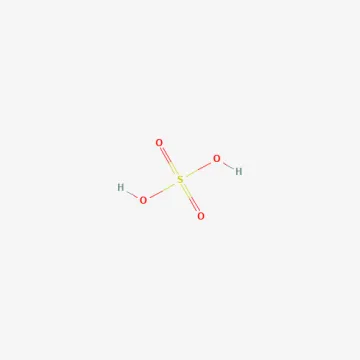
Description
Mode of action
Sulfuric acid acts as a powerful non-selective contact pesticide, primarily utilized in agriculture for its intense desiccation properties rather than as a systemic product.
The mode of action involves the rapid dehydration of plant tissues through chemical oxidation and protein coagulation, causing immediate breakdown of cell membranes.
Due to its high reactivity, it works solely on contact and does not translocate within the plant vascular system, making it highly effective for rapid above-ground vegetative destruction.
It exerts an acute herbicidal effect by burning away weed foliage upon contact; however, its lack of selectivity restricts its use to specific stages of crop development.
The speed of action is highly dependent on ambient temperature and humidity, with faster results achieved in warm, dry weather conditions which accelerate the evaporation and chemical process.
What it targets
The primary agricultural application is the desiccation of potato haulms before harvest, which facilitates mechanical harvesting and reduces the risk of tuber diseases spreading from the canopy.
It is used in cereal production to suppress weed growth that interferes with harvesting machinery, ensuring cleaner grain collection and reducing harvest losses.
Sulfuric acid helps in stopping the vegetative growth of crops, which is crucial for uniform ripening and preparing the crop for storage or processing.
The substance effectively eliminates pathogenic reservoirs found on the leaf surface by physically removing the green tissue where these organisms thrive.
By promoting rapid drying of the foliage, it allows for more efficient labor management during peak harvest periods, as it shortens the time between canopy maturity and crop collection.
Rates and timing
Application rates are strictly dictated by the specific crop and the required degree of desiccation, usually involving solutions with concentrations ranging from 5% to 15%.
Timing is critical: for potato crops, treatment is typically performed 10 to 14 days before harvest to allow for proper skin setting and tuber maturation.
Proper calibration of application equipment is essential to ensure uniform coverage, as the product has no systemic movement and missed spots will remain green and unharvested.
Operators must carefully monitor weather forecasts, as rainfall immediately after application will wash off the active ingredient and necessitate re-treatment.
The volume of solution per hectare should be sufficient to coat all target tissues but must be controlled to prevent excessive soil acidification.
Restrictions
Sulfuric acid is highly corrosive, necessitating the use of specialized, acid-resistant spraying equipment and stainless steel or polymer-based delivery systems to prevent equipment failure.
Safety is the primary concern: all personnel must wear full chemical-resistant protective gear, including face shields, heavy-duty gloves, and acid-resistant suits to prevent chemical burns.
Environmental mitigation is mandatory; spray drift must be strictly managed to avoid killing non-target vegetation and to prevent contamination of local water sources.
Storage of the chemical must be in leak-proof, corrosion-resistant tanks, with strictly controlled access to prevent accidents and unauthorized handling.
Disposal of unused solutions and equipment wash-water must be handled according to local environmental regulations, typically requiring neutralization with alkaline agents before disposal.
Regulatory
Status in the European Union
Not approved in the EU
- CAS number
- 7664-93-9
- Category (EU)
- HB - Herbicide
Hazard classification (CLP)
Skin Corr. 1A - H314
EU legislation
EU status is for reference only and does not replace national registration in your country.
Content graph
Connections · Sulphuric acid
Most often together:
Marketplace