
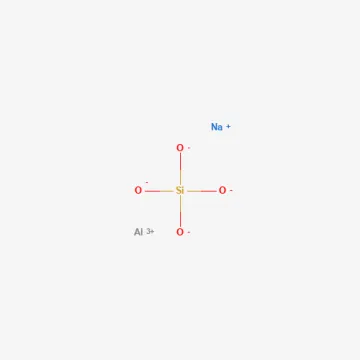
Sodium aluminium silicate
Description
Mode of action
Sodium aluminosilicates are a group of inorganic compounds used in modern agriculture as contact-based protective agents.
Their mechanism of action is primarily physical, involving the creation of a thin barrier on the leaf and stem surfaces of crops.
Due to their significant hygroscopic and adsorptive properties, these substances reduce the moisture level in the phyllosphere, making it difficult for fungal spores to germinate.
When in contact with pathogen structures like mycelium or conidia, the particles interfere with cell surface integrity, causing dehydration and eventual cell death.
Since they do not possess systemic properties, they remain on the surface, which prevents residue accumulation inside the plant tissue.
What it targets
This group of substances is particularly effective against various surface-dwelling fungal pathogens that affect crop productivity.
They are widely used to manage outbreaks of powdery mildew across different horticultural and grain crops.
Field data indicates their utility in inhibiting the development of gray mold and several types of leaf spot diseases.
Additionally, these compounds serve as a deterrent for certain pests by disrupting their ability to settle and feed on the plant surface.
- Powdery mildew on fruit crops
- Gray mold on berries
- Rust in small grains
- Leaf spot diseases in vegetables
Rates and timing
Application rates for these products depend heavily on the target crop and the severity of the prevailing disease pressure.
Uniform coverage of all foliage is essential to maintain the efficacy of the physical barrier created by the application.
Optimal timing for application generally corresponds to the early vegetative stages or immediately upon detection of initial symptoms.
Subsequent applications are recommended every 7 to 14 days, particularly in humid conditions that promote rapid disease proliferation.
The total volume of the spray solution should ensure thorough wetting without causing excessive runoff into the soil.
Restrictions
While sodium aluminosilicates are generally safe for the environment, specific safety protocols should be observed during preparation and spraying.
Avoid applying these substances during high-wind conditions to ensure target precision and minimize drift to surrounding areas.
Care must be taken when mixing with other pesticides, as pH levels may affect the overall stability and performance of the mixture.
Storage requires cool, dry conditions to prevent the product from absorbing ambient moisture, which can compromise its physical state.
Always verify compatibility with surfactants or other additives to ensure they do not impair the contact barrier formation.
Status in the European Union
Not approved in the EU
- CAS number
- 12003-51-9
- Category (EU)
- RE - Repellant
- Approved from
- 01.09.2009
- Approval until
- 31.08.2019
- ADI
- Not appl.
- ARfD
- Not appl.
- AOEL
- Not appl.
EU status is for reference only and does not replace national registration in your country.