
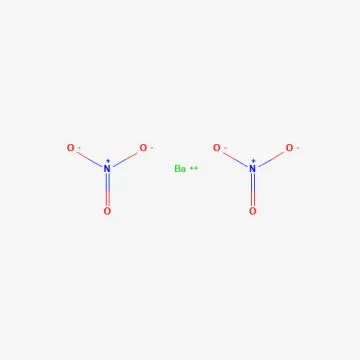
Barium nitrate
Description
Mode of action
Barium nitrate (Barium nitrate) is primarily utilized in agriculture as a chemical component within complex pesticide formulations. It acts as an oxidant, which is crucial for enhancing the bioavailability and efficacy of the primary active ingredients.
The mechanism of action involves the modification of cellular membrane permeability in pests and pathogens. By altering these barriers, the compound ensures a more rapid and lethal penetration of the active substance into the target organism.
In addition to its role as a penetrant, barium nitrate disrupts internal oxidative-reductive processes of pathogens, effectively suppressing their metabolism and halting the development of diseases.
When used in specialized mixtures, the substance can also exert a phytotoxic effect on target weed species, aiding in the systemic destruction of undesirable vegetation.
The compound's performance is sensitive to environmental conditions, such as ambient temperature and relative humidity, which directly influence the rate of chemical interaction on the plant's surface.
What it targets
Barium nitrate is applied as a supporting agent to control a variety of agricultural pests and fungal diseases. It is particularly effective when dealing with organisms that possess high natural resistance to conventional chemicals.
The substance is used in the treatment of various fruit crops and field vegetables to mitigate the impact of vascular diseases and surface-feeding insects.
It is also employed against soil-dwelling pests, where its chemical properties assist in creating an environment hostile to the survival and reproduction of harmful larvae.
In vegetation management, it serves as an adjuvant in herbicide solutions, helping to overcome the wax layers of leaves on tough, perennial weeds.
These formulations are critical in scenarios where standard pesticides fail to reach sufficient concentration within the pest tissue due to environmental or biological barriers.
Rates and timing
Application rates are dictated by the specific commercial product formulation. Farmers must adhere to the manufacturer's technical guidelines to ensure safety and effectiveness.
The timing of the application is synchronized with the phenological stages of the crops and the life cycle of the targeted pest. Proper timing maximizes the contact efficacy of the compound.
During the preparation of tank mixes, sequence is vital. Components must be added in the specified order to ensure complete dissolution and prevent unwanted chemical reactions.
There are strict limits on the number of applications per season to comply with food safety regulations and to prevent the accumulation of barium residues in the final yield.
Operators should perform spraying during the calmest parts of the day, such as early morning, to ensure precise targeting and minimize drift towards non-target areas.
Restrictions
Barium nitrate is inherently toxic to humans and animals. Stringent personal protective equipment (PPE), including respirators, chemical-resistant gloves, and goggles, is mandatory during handling.
Environmental protection is paramount; the substance must never be discharged into waterways as it poses a significant risk to aquatic life and can persist in ecosystems.
The chemical is highly harmful to honeybees and other pollinators. Applications are strictly prohibited during the crop blooming period to prevent catastrophic impacts on local bee populations.
Storage must be conducted in original, sealed containers within well-ventilated, secure warehouses, keeping the product strictly separated from food, animal feed, and fertilizers.
Equipment decontamination is a necessary protocol after every use. Wash water must be collected and treated or disposed of according to local environmental legislation.
Status in the European Union
Not approved in the EU
- CAS number
- 10022-31-8
- Category (EU)
- RE - Repellant
EU status is for reference only and does not replace national registration in your country.