
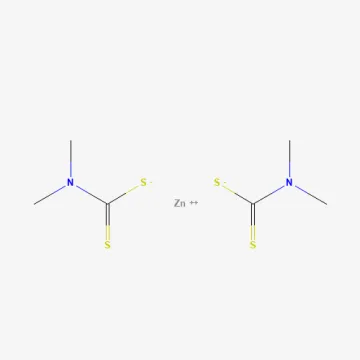
Ziram
Description
Mode of action
Ziram belongs to the dithiocarbamate chemical class. It is a predominantly contact-action fungicide that does not penetrate plant tissues, but instead creates a protective barrier on the surface that prevents pathogen spores from germinating.
The mode of action of the substance is based on the inhibition of enzymatic processes within the fungal cells. Active components block the sulfhydryl groups of enzymes, leading to the disruption of metabolism and the death of the pathogenic microorganism.
Due to its chemical structure, Ziram has high adhesive properties. This allows the active ingredient to remain on the surface of leaves and stems even under unfavorable weather conditions, providing long-lasting protection.
The product lacks systemic activity, so the effectiveness of the protection depends directly on the quality and uniformity of leaf surface coverage during spraying. It is crucial to achieve fine-mist application of the spray solution.
Unlike many other fungicides, Ziram is characterized by moderate toxicity to warm-blooded animals, allowing it to be used at specific vegetative stages as part of integrated plant protection schemes.
What it targets
This substance is used to control a wide spectrum of phytopathogens that cause spots, scab, leaf curl, and various types of rot on fruit, berry, and vegetable crops.
It is effective against pathogens attacking the aerial parts of plants during the growing season. In particular, it is used to suppress the development of fungi from the classes Ascomycetes, Basidiomycetes, and Deuteromycetes.
The primary targets include the causative agents of apple and pear scab, peach leaf curl, and various spot diseases affecting stone and pome fruits in orchards.
Ziram is also used for treating vegetable crops against early blight, anthracnose, and other spot diseases that can reduce the market quality of produce during storage and transportation.
- Pome fruit scab
- Peach leaf curl
- Early blight of vegetables
- Anthracnose and various leaf spots
Rates and timing
Application rates vary depending on the crop being cultivated, the level of infection pressure, and the equipment used for application.
In orchards, treatments are usually carried out during the "green tip" or "pink bud" phases. If necessary, treatments are repeated at 10–14 day intervals, monitoring the condition of the vegetation.
The volume of the spray solution should ensure complete wetting of the entire leaf surface without runoff to the soil. Insufficient water volume reduces the effectiveness of the product due to the lack of a continuous protective screen.
For vegetable crops, the frequency of treatments is determined by agrotechnical timelines and expected harvest dates to avoid the accumulation of active ingredient residues in the fruit.
Precise dosages must always comply with the regulations stated on the specific product label, as the concentration of the active ingredient may vary between different brands.
Restrictions
The product is not recommended for use during periods of active bee foraging. Despite its relative safety, standard safety precautions should be observed when working with agrochemicals.
Ziram is incompatible with substances having a strongly alkaline reaction and with copper-based agents, as this can lead to decreased fungicidal activity and potential phytotoxicity.
When using the same contact fungicide repeatedly, there is a risk of pathogen resistance developing, so it is recommended to rotate Ziram with products from other chemical classes.
Working solutions should be prepared immediately before use. It is strictly forbidden to leave unused solution in the sprayer tank for extended periods due to the risk of sedimentation.
When working, it is necessary to use personal protective equipment for skin, respiratory tract, and eyes. Do not allow the product to enter water bodies or drinking water sources.
Status in the European Union
Not approved in the EU
- Category (EU)
- RE - Repellant
EU status is for reference only and does not replace national registration in your country.