
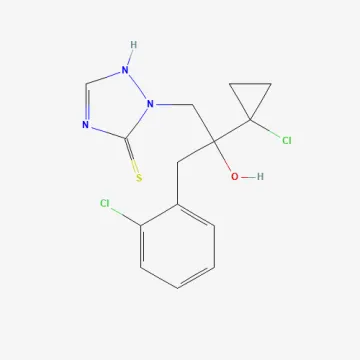
Description
Mode of action
Prothioconazole is a systemic fungicide belonging to the triazolinthione chemical class, known for its broad-spectrum control of fungal pathogens.
Its primary mechanism of action involves inhibiting the enzyme lanosterol 14α-demethylase, which is vital for the biosynthesis of ergosterol in fungal membranes.
By disrupting the formation of cell membranes, the substance effectively stops fungal growth, prevents sporulation, and kills existing mycelia.
The chemical exhibits strong curative, preventative, and eradicant properties, allowing for flexible application timing during the growing season.
Once applied, prothioconazole is absorbed by plant tissues and exhibits acropetal translocation, ensuring uniform protection of the vegetative parts.
What it targets
The substance is primarily used to control Fusarium head blight in wheat, which is essential for reducing mycotoxin contamination in harvested grain.
It is highly effective against various leaf spot diseases, including Septoria tritici blotch, net blotch in barley, and rusts.
In oilseed rape, prothioconazole is widely employed to manage Sclerotinia stem rot, Phoma leaf spot, and Alternaria blight.
The fungicide also shows efficacy against powdery mildew and eyespot in cereal crops, providing long-lasting field protection.
Its versatility makes it a cornerstone in integrated pest management programs for maize, soybeans, and horticultural crops.
Rates and timing
Typical application rates range from 150 to 250 milliliters of product per hectare, depending on the specific formulation and disease pressure.
For wheat, the ideal application window is during the flowering stage (anthesis) to target Fusarium pathogens specifically.
Application should be timed based on scouting results and weather conditions that favor the development of fungal outbreaks.
It is often formulated in combination with other active ingredients, such as strobilurins, to expand the spectrum of activity and manage resistance.
Ensure thorough spray coverage of the foliage or grain head to achieve maximum biological efficacy under heavy disease pressure.
Restrictions
Do not apply the fungicide if rain is expected within two hours, as wash-off can significantly reduce the efficacy of the treatment.
Operators must wear appropriate personal protective equipment, including gloves, goggles, and chemical-resistant coveralls, during handling and application.
Avoid applying the product in extreme heat or windy conditions to minimize drift and ensure optimal absorption by the plant foliage.
Adhere strictly to the pre-harvest interval (PHI) specified on the product label to ensure food safety and regulatory compliance.
Store the product in a cool, dry, well-ventilated area, keeping it out of reach of children, livestock, and unauthorized personnel.
Content graph
Connections · Prothioconazole
Most often together:
Marketplace
Products · 60





Lomardor 400FS
Байєр КроnСаєнс АГ ,м.Дормаген ,Німеччина
Fungicides
0
0
·
35
1 offer
28.71 €per 1 l
Buy


