

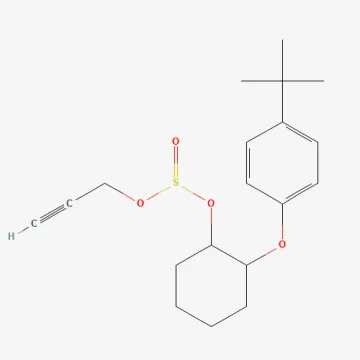
Description
Mode of action
Propargite belongs to the sulfite chemical class. It is a contact-acting acaricide that lacks systemic properties but effectively targets adult mites and their nymphs.
The mechanism of action is based on the inhibition of mitochondrial respiration in the pest. Propargite disrupts oxidative phosphorylation processes within the mite's cells, leading to rapid energy depletion and paralysis.
The substance affects the pest primarily through direct contact with the spray solution or by touching the treated leaf surface.
Due to the lack of systemic action, the product requires thorough coverage of the entire leaf surface, including the underside where mite populations are most commonly found.
Propargite provides a pronounced "knockdown" effect, although total pest mortality may occur over several days following the treatment.
What it targets
The active substance is designed to combat a wide range of phytophagous mites of the Tetranychidae (spider mites) and Eriophyidae families.
Key crops where propargite is applied include vineyards, orchards, soybeans, cotton, corn, and open or greenhouse vegetable crops.
- Two-spotted spider mite (Tetranychus urticae).
- European red mite (Panonychus ulmi).
- Grape erineum mite (Colomerus vitis).
- Other phytophagous species resistant to organophosphate compounds.
A significant advantage of this group is its high efficacy against mite populations that have developed resistance to other classes of acaricides.
The product does not have a significant impact on beneficial predatory insects, making it a valuable component in integrated pest management systems.
Rates and timing
Application rates vary depending on the crop, the severity of the pest infestation, and the chosen method of application (spraying).
For vineyards and fruit orchards, dosages are generally applied to ensure intensive use of the working fluid for complete canopy coverage.
Treatment timing is linked to the economic threshold of damage. It is recommended to begin spraying at the first signs of mite presence during the growing season.
The interval between treatments should be at least 14-20 days to prevent the development of resistance in pest populations.
It is important to follow the guidelines provided by the manufacturer for specific formulations, as concentrations of the active ingredient may differ significantly.
Restrictions
When using propargite, its phytotoxicity must be considered. Products based on this substance are not recommended for young plants or crops under stress (drought, excessive moisture).
Avoid applications when air temperatures exceed +25...+28°C due to the risk of leaf or fruit burns on sensitive varieties.
The use of personal protective equipment for skin, eyes, and respiratory organs is mandatory, as the substance is classified as moderately hazardous.
Strict adherence to pre-harvest intervals is a critical requirement to ensure the safety of fruit and vegetable produce for consumers.
The substance is incompatible with alkaline products and oils, which requires careful monitoring of tank mix components to prevent loss of effectiveness.
Content graph
Connections · Propargite
Most often together:
Marketplace
Products · 3

