
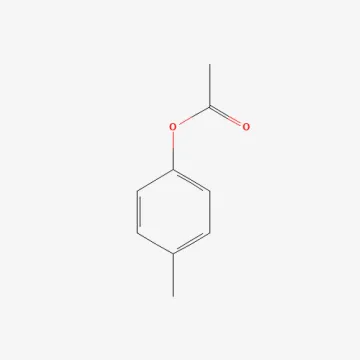
p-Cresyl acetate
Description
Mode of action
p-Cresyl acetate belongs to the class of phenol esters and is primarily utilized in agricultural practice as a pheromone component or an attractant for integrated pest management.
The compound emits a specific scent that interacts with the olfactory receptors of insects, mimicking natural signals to lure pests into specialized traps or monitoring stations.
Unlike conventional contact insecticides that target the nervous system of pests, p-cresyl acetate functions through behavioral modification, such as disruption of mating patterns.
The chemical stability of this ester ensures long-lasting activity in field conditions, making it a reliable tool for long-term population density tracking.
By interfering with the insect's chemical communication, p-cresyl acetate significantly reduces reproductive success, thereby preventing infestation outbreaks on crops.
What it targets
The primary targets for p-cresyl acetate-based tools are various Coleoptera and Lepidoptera species that cause economic damage to orchards, vineyards, and field crops.
It is specifically effective against pests that rely on volatile aromatic compounds to locate host plants or to find mating partners during their active season.
In industrial fruit production, this substance is used as a crucial monitoring tool to inform decision-making regarding the application of traditional insecticides.
Beyond field use, the compound may be used in storage facilities to create deterrent zones, preventing infestations in harvested grains and raw agricultural products.
Integrating p-cresyl acetate into protection schemes helps farmers reduce reliance on broad-spectrum toxic pesticides, supporting sustainable agricultural practices.
Rates and timing
Timing of application is strictly dictated by the life cycle of the pest, requiring the deployment of traps prior to the emergence of the adult generation.
Dosage within dispensers must be precisely controlled, as excessive concentration of the attractant can cause repellent effects or sensor saturation in the target insects.
Under standard field conditions, dispensers typically require replacement every 4 to 8 weeks, depending on local temperature fluctuations and precipitation levels.
Agronomists recommend placing traps at specific heights and intervals to ensure optimal coverage of the aromatic plume across the treated area.
Continuous monitoring throughout the critical growth stages of the crop is essential for optimizing the timing of other agronomic interventions.
Restrictions
Personnel handling the compound should use standard personal protective equipment to avoid skin or eye irritation caused by prolonged exposure to the chemical concentrate.
Avoid mixing p-cresyl acetate with incompatible chemicals, as interactions can alter the volatility or attractiveness of the substance, rendering it ineffective.
Disposal of used dispensers and cartridges must adhere to regional environmental regulations to prevent soil and water contamination.
Store the substance in a cool, ventilated area away from food supplies and animal feed to prevent odor transfer and accidental contamination.
Use caution when deploying these systems during peak bloom periods to ensure that the lure does not interfere with the activity of beneficial pollinators.
Status in the European Union
Not approved in the EU
- CAS number
- 140-39-6
- Category (EU)
- RE - Repellant
EU status is for reference only and does not replace national registration in your country.