

Description
Mode of action
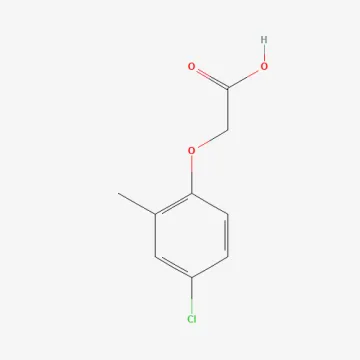
MCPA (2-methyl-4-chlorophenoxyacetic acid) belongs to the chemical class of phenoxyacetic acid derivatives. In essence, it is a synthetic analogue of auxins, which are plant hormones that trigger uncontrolled cell division when absorbed by the plant.
The mechanism of action involves the disruption of weed growth processes. The active ingredient is absorbed through leaf surfaces, moves systemically through the phloem, and accumulates in meristematic tissues, leading to stem and leaf deformation.
As a result of this pathological growth, the weed's vascular system is blocked, and its metabolism and photosynthesis are disrupted. The plant loses its ability to feed itself and dies within 10 to 15 days after treatment.
MCPA-based products exhibit high selectivity toward cereal crops. They act selectively by suppressing primarily broadleaf weeds without affecting the physiology of the main cereal crops.
The effectiveness of the product directly depends on temperature and the weed growth stage. The best results are achieved when spraying during periods of active growth, when plants are most vulnerable to systemic herbicides.
What it targets
MCPA herbicides are used to eradicate a wide range of annual and perennial broadleaf weeds. They show high effectiveness against such hard-to-control species as:
- Common lambsquarters
- Shepherd's purse
- Field mustard
- Perennial sowthistle
- Creeping buttercup
The product actively suppresses weeds from the Brassicaceae, Chenopodiaceae, and some Asteraceae families. However, it is less effective against field bindweed and several other species, which may require the use of tank mixtures.
The use of MCPA is justified in fields with high weed pressure, where competition for light, moisture, and nutrients threatens crop yields. The substance allows for cleaning crops in the early stages of vegetation.
It is important to consider the weed species composition before application. Since MCPA does not control all weed species, agronomists often combine it with sulfonylureas to broaden the spectrum of action.
Rates and timing
Application rates of MCPA active ingredients vary depending on the formulation (salts or esters), weed sensitivity, and crop development stage. Typical rates range from 0.5 to 1.5 kg a.i. per hectare.
In cereal grain crops, treatment is performed during the tillering phase before stem elongation. This is a critical period when the crop is most resistant to the herbicide, and weeds are in their most sensitive growth stage.
For flax, rates must be strictly calibrated, as the crop is sensitive to this group of herbicides. Spraying flax is carried out at the "fir tree" stage when plants reach a height of 3–10 cm.
When using in mixtures with other herbicides, it is important to verify product compatibility. It is not recommended to mix MCPA with organophosphate insecticides without preliminary phytotoxicity tests.
Application timing is strictly limited by weather conditions. The ideal temperature for herbicide activity is between +12°C and +22°C. Effectiveness decreases sharply in drought or frosty conditions.
Restrictions
MCPA is a volatile compound, especially in its ester form. This imposes serious restrictions when treating fields located near sensitive crops, such as sugar beets, sunflowers, or vineyards.
The use of the product requires strict adherence to safety precautions. It is necessary to prevent spray drift caused by wind. It is recommended to use specialized equipment for fine to medium droplet spraying.
The product has a pronounced residual effect. Although it breaks down relatively quickly in the soil through microbial action, exceeding recommended dosages can have negative effects on subsequent crops in the rotation.
Handling this pesticide requires personal protective equipment. MCPA can cause irritation to the skin and mucous membranes upon direct contact with the concentrate.
After treatment, it is recommended to observe waiting periods before allowing people into the field for manual or mechanical work, in accordance with national safety regulations for pesticide application.
Regulatory
Status in the European Union
Approved in the EU
- CAS number
- see remark
- Category (EU)
- HB - Herbicide
- Approved from
- 01.05.2006
- Approval until
- 15.08.2026
- ADI
- 0.05 mg/kg bw/day
- ARfD
- 0.15 mg/kg bw
- AOEL
- 0.04 mg/kg bw/day
Hazard classification (CLP)
Acute Tox. 4 - H302Aquatic Acute 1 - H400Aquatic Chronic 1 - H410Eye Dam. 1 - H318Skin Irrit. 2 - H315
EU legislation
EU status is for reference only and does not replace national registration in your country.
Content graph
Connections · MCPA
Most often together:
Marketplace
Products · 33


Baster
Три Дельта Компані Інтернешнл, Гонконг, Китай.
Herbicides
0
0
·
616
2 offers
11.37 €per 1 l
Buy


Grinfort DD 475
«Нанджин Ессенс Файн-Кемікал Ко. Лтд» (Китай)
Herbicides
0
0
·
55
1 offer
8.87 €per pack
Buy


Agrostar
ТОВ «Фабрика агрохімікатів», Черкаси, Україна
Herbicides
0
0
·
48
7 offers
6.67 €per 1 l
Buy


Agriter Super 500 RK
Фадер Альянс Лтд., Великобританія (Fader Alliance Ltd., England) на заводах Нідерландів, Польщі
Herbicides
0
0
·
33
1 offer
1.17 €per 1 l
Buy

Chwastyuk Extra 300
Хімічні заводи «Органіка-Сажина»С.А., Нова Сажина, Польща
Herbicides
0
0
·
637
No offers
—
Details


Binorex 375 RC
Фадер Альянс Лтд., Великобританія (Fader Alliance Ltd., England) на заводах Нідерландів, Польщі
Herbicides
0
0
·
36
No offers
—
Details


AGROTEX, RK (2-methyl-4-chlorophenoxyacetic acid in the form of dimethyl
Nufarm
Herbicides
0
0
·
25
No offers
—
Details