

Description
Mode of action
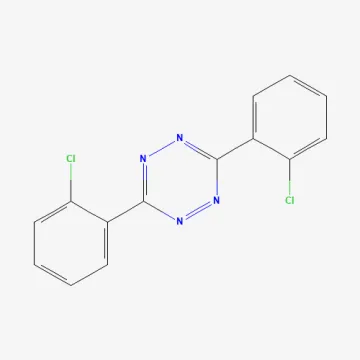
Clofentezine belongs to the tetrazine chemical class and acts as a highly selective acaricide targeting the early development stages of mites.
The mechanism of action involves the inhibition of mite embryogenesis, providing excellent ovicidal activity that prevents eggs from hatching into larvae.
While the substance does not show acute toxicity to adult mites, it effectively sterilizes female mites, resulting in non-viable eggs and a subsequent decline in population.
The compound exhibits translaminar activity, meaning it can penetrate plant tissues to reach mites feeding on the underside of leaves.
Clofentezine is known for its high resistance to rainfall, providing a long-lasting residual effect that maintains control over extended periods.
What it targets
The primary use of clofentezine is the management of phytophagous mites belonging to the Tetranychidae family.
It is particularly effective against the European red mite, the two-spotted spider mite, and various other species of plant-feeding mites.
Due to its high specificity, the chemical has a minimal impact on beneficial arthropods, including predatory mites, making it an ideal choice for integrated pest management.
Rates and timing
Timing is critical: applications should be made early in the season when egg-laying activity is at its peak to maximize the preventative effect.
Standard application rates for orchards typically range from 0.4 to 0.6 kg per hectare, depending on the severity of the infestation and crop canopy.
Thorough coverage of the foliage is essential for efficacy; operators must ensure that both upper and lower leaf surfaces are treated evenly.
If population pressure remains high, a repeat application may be necessary after an interval of 14 to 21 days to break the pest's reproductive cycle.
For greenhouse applications, dilution rates should be calculated precisely based on the volume of the crop to avoid over-application and potential runoff.
Restrictions
Clofentezine does not control insects or adult mites, necessitating the addition of complementary insecticides or adulticides in high-infestation scenarios.
Frequent use of the same mode of action may lead to resistance; therefore, it is recommended to rotate clofentezine with other chemical groups.
Personnel handling the chemical must wear appropriate personal protective equipment, including respirators, gloves, and eye protection, to minimize exposure.
While generally considered safe for bees, applications should follow local guidelines regarding pesticide use during periods of plant flowering.
The product should be stored in its original, sealed container in a cool, dry, and well-ventilated area, away from direct sunlight and moisture.
Content graph
Connections · Clofentezine
Most often together:
Marketplace
Products · 8

Apollo
Ірвіта Плант Протекшн,Н.В.,член групи компаній Мактешим – Аган Індастріз, Ізраїль
Insecticides
0
0
·
66
9 offers
38.18 €per 1 l
Buy

Tigris
China Communications Import and Export Corporation
Insecticides
0
0
·
54
2 offers
116.43 €per 1 l
Buy

Anti-Clisht k.s.
China Communications Import and Export Corporation
Insecticides
0
0
·
44
6 offers
20.3 €per 1 l
Buy

Apollo Ks
Ірвіта Плант Протекшн,Н.В.,член групи компаній Мактешим – Аган Індастріз, Ізраїль
Insecticides
0
0
·
43
1 offer
50.24 €per 1 l
Buy


