
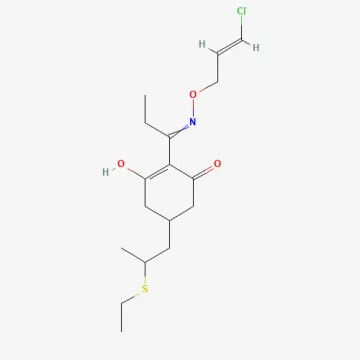
Description
Mode of action
Clethodim belongs to the chemical class of cyclohexanediones, which act as highly selective inhibitors of the enzyme acetyl-CoA carboxylase.
This enzyme is essential for fatty acid synthesis, a process critical to the integrity of cell membranes and the continued growth of plant tissues.
As a systemic herbicide, clethodim is rapidly absorbed through the leaves of target weeds and translocated through the phloem to actively growing points.
The inhibition of lipid synthesis results in the cessation of growth, followed by chlorosis and eventual necrosis of the susceptible weed species.
Broadleaf crops are inherently tolerant to clethodim due to differences in the target enzyme sensitivity, allowing for selective post-emergence control.
What it targets
The substance is primarily used for the effective control of a wide range of annual and perennial grass weeds in various crops.
It is particularly effective against aggressive perennial species like couch grass (quackgrass) that reproduce through vegetative rhizomes.
It is commonly applied in broadleaf crops such as soybeans, sunflowers, oilseed rape, sugar beets, and potatoes to manage weed competition.
The herbicide target spectrum covers many problematic grasses that compete with crops for light, nutrients, and moisture throughout the growing season.
- Quackgrass (Elymus repens)
- Barnyardgrass (Echinochloa crus-galli)
- Foxtail species (Setaria spp.)
- Wild oats (Avena fatua)
- Annual bluegrass (Poa annua)
Rates and timing
Application rates for clethodim are determined based on the specific weed species present and their current growth stage at the time of spraying.
For annual grass control, applications are most effective when weeds are small, typically in the 2 to 4-leaf stage of development.
Perennial grasses require higher label rates to ensure sufficient systemic uptake into the root and rhizome system for permanent control.
The use of spray adjuvants is generally recommended to enhance leaf penetration, especially when dealing with weeds that have thick cuticular waxes.
Applications should be timed to avoid environmental stress periods to ensure the weeds are metabolically active and capable of translocating the herbicide.
Restrictions
Clethodim should not be applied if crops or weeds are suffering from drought, frost, or significant insect damage, as efficacy may be compromised.
Tank-mixing with certain broadleaf herbicides can cause antagonism, reducing the grass-killing activity of clethodim, thus requiring sequential applications.
Great care must be taken to prevent spray drift onto sensitive cereal crops like wheat, barley, or corn, as clethodim will cause severe damage.
Compliance with re-entry intervals and pre-harvest intervals is mandatory to ensure safety for workers and to meet food residue standards.
The product has a short soil residual life, making it a sustainable choice in modern crop rotations without posing risks to subsequent planting.
Reference
Connections · Clethodim
Most often together:
Marketplace